


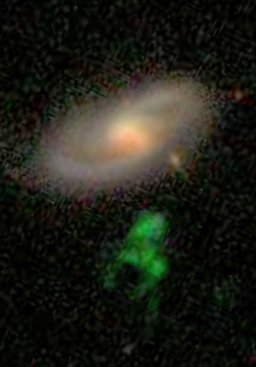
 Amateur astronomer by night and primary school teacher by day Hanny van Arkel discovered this little green man-cloud in the sky, and promptly got it named after herself: Hanny’s Voorwerp (voorwerp = “object”). When I say little, I mean huge.
Van Arkel, who hails from Heerlen in Limburg, made her discovery as part of a distributed computing project called Galaxy Zoo, in which volunteer participants are asked to classify images from the Sloan Digital Sky Survey according to a list of known celestial objects. The Voorwerp wasn’t on that list.
A guess of what the object could be comes from astronomer Bill Keel. Quoting the Galaxy Zoo blog:
A hundred thousand years ago, a quasar blazed behind the stars which would have already looked recognizably like the constellation Leo Minor. Barely 700 million light-years away, it would have been the nearest bright quasar, shining (had anyone had a telescope to look) around 13th magnitude, several times brighter than the light of the surrounding galaxy. This galaxy, much later cataloged as IC 2497, is a massive spiral galaxy which was in the process of tidally shredding a dwarf galaxy rich in gas – gas which absorbed the intense ultraviolet and X-ray output of the quasar and in turn glowed as it cooled. But something happened to the quasar. Whether it turned off, dropped to a barely simmering level of activity as its massive black hole became starved for gas to feed its accretion, or it was quickly shrouded in gas and dust, we don’t see it anymore.
But we see its echo.
Astronomers are apparently lining up to get a shufty at the Voorwerp through the Hubble Telescope, which is currently awaiting repair by a Space Shuttle crew.
Via Sargasso (Dutch). I re-coloured the original photo, because people pointed out that the blob is more likely to be green than blue. CP/IMH: “The chances of anything coming from Mars / Are a million to one, he said / The chances of anythiiiing coming from Mars / Are a million to one … and still, they come.”
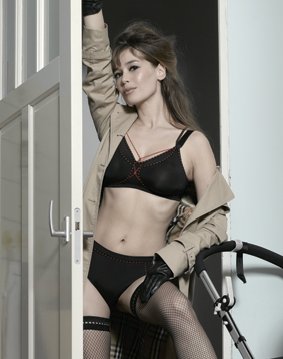 Lingerie designer Marlies Dekkers won a Contours International Lingerie Award (CILA) in the category Maternity last Monday with her “Maternity Collection,” three lingerie sets for mothers with babies. The nursing bras have broad shoulder straps and cups that can be opened, and a “milk marker” made from black satin ribbon to indicate which breast was last used to feed. The jury of this third installment of the CILAs particularly liked the Starlet Nursing Bra (see photo) for its combination of comfort and style.
 A gang robbed two Belgians of 70 kilos of gold last week after one of them had stopped the transport dressed as a policeman. The Belgians, driving an inconspicuous BMW, had just left Schiphol and were on their way to their country when a policeman on a motor cycle signaled them to leave the highway towards a tunnel near De Meern (Utrecht). There his accomplices waited with a van and another car. The two Belgians were forced to leave their car at gunpoint. The robbers took all 70 slices of gold, totalling about 1 million euros in value.
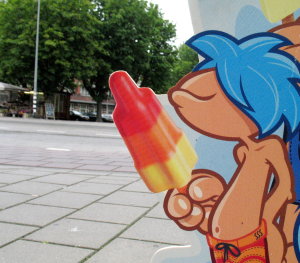 12 April 1961: the Soviet Union launched the first man in space, Yuri Gagarin.
 Nefarma (the industry association for innovative medicine) and its members are found not innovative enough. In a study commissioned by Nefarma itself Amsterdam marketing research agency Motivaction further concludes that manufacturers shirk their social responsibility, and are not transparent about their price-making process. Nefarma itself is portrayed as a messenger boy for the industry, with lack of clout, and invisible in the public debate.
 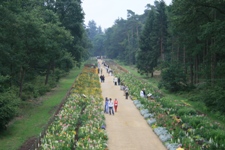 Until August 30 visitors of the Triënnale in Apeldoorn will be able to walk
 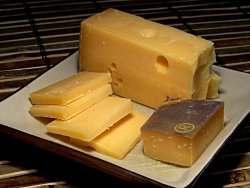 We’re in the middle of the six week school holiday period, so Dutch travel trailers have once again spread out across Europe. Not only do we have a reputation of traveling with trailers but also of bringing along our own food—what do you mean, we have to integrate too?
 Researchers from the Radboud University in Nijmegen


