November 20, 2011

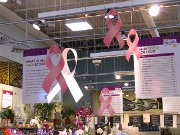
Cancer research charity Pink Ribbon donates zero percent to cancer research

Filed under: Health by Branko Collin @ 5:33 pm

Sometimes it is best to shut up. When news show Nieuwsuur reported that Pinkribbon.nl spent only 1.8 % of the donations it received on cancer, the charity threw a hissy fit. The findings of the show were far from the truth, they claimed, and the makers of the programme obviously prejudiced.

This led writer and breast cancer survivor Karin Spaink to do her own research. Last Saturday she dove into the annual reports of Pink Ribbon, and discovered that the numbers Nieuwsuur had dug up were indeed incorrect — the real numbers were worse!

According to Spaink, Pink Ribbon Netherlands has spent exactly 0.0 percent of the money it received through donations on cancer research. The foundation has collected approximately 18 million euro between 2007 and 2010. In that period it has built up a reserve of 7 million euro, and spent 3 million euro on the costs of running its organisation. About 6 million euro has gone to ‘psych-social care’, and 1.5 million euro to education.

Since the Nieuwsuur report, Pink Ribbon Netherlands has been trying to twist the meaning of the phrase ‘cancer research’ to fit its expenditures. Money that Pink Ribbon received from fellow cancer charities KWF and A Sister’s Hope and that was earmarked for research, is now suddenly supposed to count towards to its own goals.

Spaink has been critical of Pink Ribbon Netherlands before. In 2006 she lambasted the foundation for not publishing its annual reports, which it has since done. Earlier this week she criticized the whole pink ribbon phenomenon as a form of consumer indulgence.

Earlier this year activists the world over criticized the practice of ‘pinkwashing‘, where companies whose products and services increase the risk of cancer pretend to be supportive of cancer victims by donating money to Pink Ribbon.

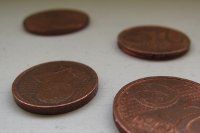
(Photo by Clyde Robinson, some rights reserved)
Tags: , , ,

November 19, 2011

“On the beaches of Texel only left shoes are ever found”

Filed under: General by Branko Collin @ 12:16 pm

The producers of the above video write:

Flotsam & Jetsam is a documentary based around the beachcombers of Texel, one of the largest Frisian islands north of Holland.

Due to Texel’s geographical position, tidal system and strong winds, an estimated two tons of Flotsam & Jetsam washes up on its beach each day.

The film follows the lives of the beachcombers (or Jutters as they are known), exploring their relationships and history as extraordinary people in extraordinary situations.

Beachcombers are people who ‘harvest’ flotsam and jetsam from beaches. I am not quite sure what the legal status is. Wikipedia claims beach combing is illegal in the Netherlands, but the only law text I could find (Book 8 of the Burgerlijk Wetboek, articles 550 and onward) seems to suggest that beach combing is a form of marine salvage, meaning that the owner of the goods can come and collect them up to two years after they were found, but must pay a decent wage in return.

The documentary is only 13 minutes long, and well worth your time.

‘Jutter’ Jan Uitgeest (73): “There are only eight of us left. Beachcombing is getting less popular because there aren’t that many finds any more. We are dependent on storms. Last year Terschelling had a large find of wood, and a container filled with snacks. On Ameland and Schiermonnikoog they found a container with mountain bike wheels and a couple of thousand coats, so that now the inhabitants of Schiermonnikoog are walking around in coats with nice fur collars.”

Link: Trendbeheer. Video: Vimeo / Flotsam and Jetsam.

Tags: , , , , , , , , ,

November 17, 2011

‘Knitting graffiti’ wins best neologism for 2011

Filed under: Art,General by Orangemaster @ 1:32 pm

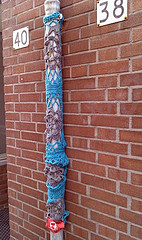
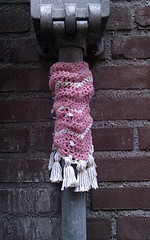
The Dutch verb ‘wildbreien’ (literally ‘wild knitting’, but really meaning ‘knitting graffiti’) was chosen as the neologism (new word) of 2011. Instead of something negative or lowbrow, knitting graffiti should makes us all feel warm and fuzzy inside. I know I did when I snapped pictures of it in Amsterdam’s Jordaan district. It is also referred to as ‘straatbreien’ (‘street knitting’) because it livens up the streets.

If only it could keep them warm.

(Link: inl.nl)

Tags: , ,

November 16, 2011

Goose meat croquettes made from airport geese

Filed under: Animals,Aviation,Food & Drink by Orangemaster @ 12:47 pm
geese02.jpg

We’ve written a lot of croquette stories on this blog, made from meat leftovers, questionable vegetarian variants and about general croquette awareness.

A goose meat croquette sounds to me like a Dutch Christmas appetizer or even a fancy French one. However, the geese in question are some of 100.000 geese a year that are shot to stop planes at Schiphol getting geese in their engines.

Beach side café Beach Inn in IJmuiden, North Holland is serving goose meat croquettes made from the geese shot down at Schiphol airport. As I also saw recently on telly, a goose hunter for the airport said catching and releasing would mean hiring an army (they fly back to the airport anyways, a waste of time) and poisoning their eggs is just not done anymore and doesn’t really help.

The geese are usually destroyed or sometimes end up in cat food. Rob Hagenouw, an artist from Amsterdam, contacted some hunters, score some goose and worked hard at creating his own recipe. He says that with his croquettes, the flavours really come out.

Eating goose, or turkey for that matter, is not really a Christmas thing in the Netherlands for many reasons. First, many people do not have ovens due to a lack of living space. They have combination microwave and and oven devices that barely fit a decent sized pizza. Second, even if you do have an oven like I do, a goose or turkey won’t fit. Guineafowl or chicken is the best you can hope for. Another reason is that it’s just not a Dutch tradition to shove a big bird in the oven.

(Link: www.telegraaf.nl)

Tags: , , ,

November 15, 2011

Dial 114 when the neighbour kicks his cat

Filed under: Animals by Orangemaster @ 12:15 pm

The Dutch emergency number is 112, but thanks to a political party that has more in common with animals than people who don’t look Dutch, they’ve set up the emergency number 114 144, opening today, to report animal-related accidents, abuse and neglect. Calling 114 144 will send specially trained cops over to that puppy farm that sells cute puppies illegally ‘imported’ from Albania and what have you.

If you read the information from 114 Red een dier (114 Save an animal), the site tells you to dial 144, which has to be a mistake is confusing to say the least.

Of course, it sounds like a great idea, just like training ‘animal cops’ to catch people who mistreat animals and hand down tougher sentences against people who abuse animals. It remains ironic that although the current government promised 3,000 additional regular cops on the streets to handle crime, it welched on that and managed to scrounge up 500 animal cops to appease their ‘silent’ coalition partner, the one that likes furry animals and dislikes humans of the non-Dutch persuasion.

Just remember, a few years ago the Dutch finally outlawed sex with animals, but before that was a top distributor of animal porn worldwide.

Some animals are more equal than others. Just like people.

UPDATE: According to newspaper De Volkskrant, the animal emergency number is 144, but it used to be 114. Nobody knows why and the government hasn’t provided an answer yet. What a mess.

MORE UPDATE: According to nu.nl news site, it was controversial member of Parliament Dion Graus, also of the not so non Dutch friendly political party who personally reserved the domain name ‘114redeendier.nl’. He was planning to push his animal friendly ideas through for a long time, and his day came. The irony of him having been accused of beating his ex wife and making threats against his ex stepfather (justice dropped it for lack of evidence), but wanting to defend animals makes him quite the colourful politician.

(Link: www.rnw.nl)

Tags: ,

November 14, 2011

Underwater bridge by Ro&Ad architects recreates attacker’s eye view of fort

Filed under: Architecture by Branko Collin @ 8:58 am

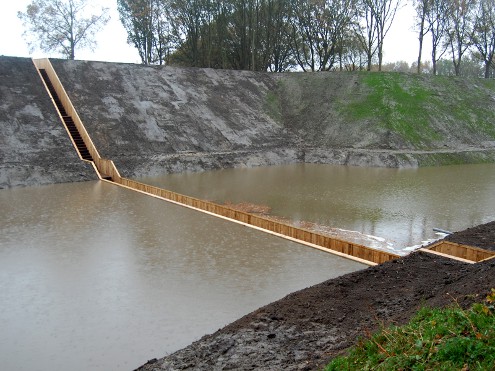
This bridge crosses the moat to Fort de Roover in Halsteren, Noord-Brabant, which was part of a series of defences called the West Brabant Water Line.

Gizmodo writes, “it is made from sustainable Accoya wood treated with a non-toxic waterproof coating that protects it from decay, and since the moat is too shallow for boat traffic, there’s little risk of waves splashing up over the side.”

The bridge made the shortlist for the Building of the Year Award 2011 (which was ultimately won by the parking garage of the Windesheim College in Zwolle).

Water lines were defences that worked using inundation. Large tracts of lands were flooded, making them impassable to advancing armies. The West Brabant Water Line is the oldest of the country and was built in 1628. The main function of later water lines was to maintain the province of Holland as a national redoubt. The introduction of the tank in modern warfare put a stop to their use.

(Photo: ro-ad.org. See there for more photos, or follow the Gizmodo link.)

Tags: ,

November 13, 2011

Sailor boycotts prize because teenage girl Laura Dekker is also in the running

Filed under: Sports by Branko Collin @ 1:40 pm

Somebody called Lucas Schröder has rejected his nomination for the prestigious Conny van Rietschoten Trophy, nauticlink.nl reports.

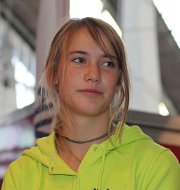
Schröder does not want his achievements to be compared with those of Dekker: “Many will inevitably see Laura’s nomination for the Netherlands’ most important sailing award as a collective opinion of the sailing community. This makes me feel so uncomfortable that I request you no longer consider me a candidate for your trophy.” Dekker’s solo global circumnavigation attempt has stirred controversy both inside and outside the Dutch sailing community.

It is unclear to this blogger what Schröder’s achievements are supposed to be. Nauticlink mentions his participation in an endurance race called Mini Transat, in which sailors cross the Atlantic Ocean in 6.5 metre boats. Schröder recently achieved a tenth place in that race.

The foundation that awards the trophy writes on its website that it regrets Schröder’s decision, and abstains from further comment. Schröder, whom I had never heard of before, managed to get a lot of free press with his action.

Laura Dekker in the meantime is busy crossing her third ocean in a row, the Indian Ocean. She is keeping mum about the route she is taking, as she doesn’t want to put ideas into the heads of Somalian pirates—which to me strongly suggests she is going for the Suez route.

Update 14-11: it turns out Laura is taking the South-African route after all. She has just arrived in Durban.

See also: Teenager attempts sailing solo around the world record.

(Photo of Laura Dekker by Wikimedia Commons user Savyasachi, some rights reserved)

Tags: ,

November 12, 2011

Most optical fibre connections are not being used

Filed under: Technology by Branko Collin @ 12:25 pm

Webwereld reported last Wednesday that 72 % of all optical fibre connections in the Netherlands are currently not being used.

In September 844,000 households in the Netherlands were connected to fibre by Reggefiber, 38 % up from last year. Only 240,000 households were actually customers using the network.

Telecom analyst David Yoshikawa told Webwereld that Reggefiber probably needed to step it up a notch if it wanted to remain able to pay its bills. He also offered a number of explanations for the low ‘activation’ rate:

  • Cable internet companies put in a lot of work to woo customers.
  • Reggefiber lowered its self-imposed limitation on the number of interested households that are required for a neighbourhood to be hooked up to the network from 40 % to 30 %.
  • On a number of locations, especially in big cities, Reggefiber started digging without measuring interest first.

A comparison: I can get 60 megabit downstream internet over fibre at XS4all for 65 euro per month, including telephony and television. UPC offers the same speed over cable for just 52 euro. For fibre to be worthwhile, it needs to offer both higher speeds and applications that people could use that higher speed for. Already having the fastest internet connections of Europe is not going help acceptance of a marginally faster connection type.

As an aside: at least digging up the roads is well regulated here. Anybody who wants to lay cables and pipes can, but they need to coordinate with other stakeholders using a government run web app called KLIC, so that roads remain as unmolested as possible.

From the KLIC website:

Excavators must notify Kadaster-KLIC before starting excavation work. Instructions for submitting a notification are presented below in the section ‘Submitting a Notification of Excavation Work’.

Your notification will be passed on to the network operators who have underground cables or pipelines in the area where you intend to excavate. These operators will send the relevant information about their cables or pipelines to Kadaster electronically, which then compiles the information and emails you a link to download the relevant information for your excavation site.

You must consult this information when undertaking excavation work to avoid damaging cables and pipelines. The maps must be available at the excavation site.

See also: Gigabit internet connection to the houseboat.

(Photo by Mephisto, some rights reserved, based on a photo by Daniel Mayara)

Tags: , ,

November 11, 2011

The King of Indo-Rock is no longer

Filed under: History,Music by Orangemaster @ 11:57 am

Rock and roll guitarist Andy Tielman, the figurehead of the Indo-Rock scene and frontman of the Tielman Brothers band has died in Indonesia at age 75.

Before immigrating to the Netherlands, the Tielman played for the Dutch military in Indonesia in the early 1950s. They quickly became famous, having been invited to play the World Expo in Brussels in 1958, just one year after landing in the Netherlands.

Later in their career, they also toured much of Germany. “At that time, bands could only play on weekends for little or no money at all, but in Germany they could get a contract for a month or at least a couple of weeks and make scandalous much money.”

Tielman fans also call him an innovator. He took a six string electric guitar, added four extra strings and tuned them in a way nobody had done before, in search of the big sound he wanted, which became the band’s tight signature sound. The bass players also had two different sounds that complimented each other through the use of different strings and specific amplifier setting, making the Tielman sound very wide on stage.

However, it’s the way Tielman brothers played their instruments live that people wanted to see and here is a video of them rockin’ out.

(Link: nos.nl)

Tags: , ,

November 10, 2011

The Schokker, a new Dutch currency

Filed under: General,Weird by Orangemaster @ 11:50 am

The municipality of Noordoostpolder in the province of Flevoland run by the Christian Union (‘centrist’ Christians) and SGP (fundamentalist Christians) is seriously considering issuing their own currency, the Schokker. The name comes from a type of Dutch ship that comes from Schokland, a village in the Noordoostpolder.

An April Fools’ Day joke it isn’t: “our own currency in the municipality would strengthen the local economy, as residents would spend more locally. Of course, you could still pay in euro.”

It wouldn’t be the first time zealous Christians closed themselves off from the real world to cause more problems for themselves and others, so we’ll keep you posted.

(Link: datditkaninnederland.nl)

Tags: , ,