


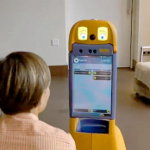
According to Maartje de Graaf who recently earned her PhD from the University of Twente, a ‘social robot’ with an overly human appearance creates an unrealistic sense of expectation for most Dutch people. They feel that a robot should not resemble a human being and that the distinction between human and robot needs to remain clear, unlike Japanese humanoid robots that attempt to resemble humans.
De Graaf’s research reveals that people quickly treat robots as human objects after working or living with them for only a short while. “Although most people would reasonably agree that robots are programmed machines that only simulate social behaviour, the same people seem to ‘forget’ this while interacting with these machines, treating the robot as a social other fellow human being and even care for it as they would one of their own family members.”
De Graaf soon plans to investigate whether and how the relationships some users are willing to establish with social robots can contribute to the psychological well-being of those users, often with the elderly mentioned as a target group.
(Link: phys.org, screenshot from the video. Video: YouTube / Smart Homes)
 In 1962 Dutch cinema’s golden child Bert Haanstra visited the zoo of Amsterdam, Artis, during a sun-filled period and filmed the visitors as they were laughing, yawning, scratching themselves, chatting and taking naps. Then he filmed animals doing the same thing and edited the result to contrast the two groups and perhaps to say “we are not that different, you and I”.
 A remarkable verdict from a disciplinary court: a lawyer was found to have acted without the dignity proper to his profession when he kissed a friend on the cheek in greeting while representing her.