


 Two angry blog posts in as many months show the state of freedom of information in the Netherlands. Long story short, the government wants everybody to be transparent except themselves.
In the past year political blog Sargasso directed 30 or so freedom of information requests at all levels of government. Their report of how they fared (the first court victories are expected next year) reads like a how-to for civil servants—how to sabotage freedom of information requests:
- Be late in everything you do.
- Split requests into multiple parts and reject them all separately.
- Send ten-page-long rejection letters full of legalese.
- Let the complaints committee reject the inevitable complaints.
- Once forced by a court of law, redact the information you return to the point of illegibility.
- Wash, rinse, repeat.
Dealing with all of these things takes time and money, of which the state possesses infinitely more than the average citizen or reporter.
Sargasso also noted that they had no troubles at all with FOI requests for non-sensitive subjects (e.g. how many restaurant permits does a city have). Only once they started digging into things like the presumably fraudulent past of the former mayor of Helmond, Fons Jacobs, did they run into a wall.
In August the Retecool blog made minced meat out of the argument that the fines governments have to pay for refusing to perform their legal duties were too high and the result of systemic fraud. Both the Vereniging Nederlandse Gemeenten (Association of Dutch municipalities) and Minister of the Interior Ronald Plasterk had argued as much.
Retecool (a not always SFW blog) pointed out that many municipalities only had to pay one or just a few fines in 2012 which hardly points to systemic abuse. The few cases where abuse seemed real ended up before the courts who had no troubles finding for the municipalities when the facts warranted it. The city of Eindhoven (200,000 inhabitants) paid the highest amount of fines of any place in the Netherlands. The 119,060 euro in fines they paid last year were for all requests they failed to process in time, not just FOI requests. Retecool contrasts this to the severance packages the city handed to its former employees, which was 150,000 euro in just the first 9 months of 2012. The blog contrasts Eindhoven’s fines with the cost of The Hague’s new year’s party, 125,000 euro in 2013. Sounds to me like the fines may not be high enough.
See also: No fees for freedom of information requests says Dutch Supreme Court
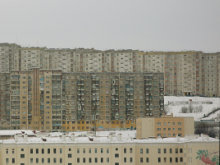
(Photo of the closed city of Severomorsk in Russia by Sergej Shinkarjuk, some rights reserved)
 Municipalities can only charge fees for personal services and responding to a freedom of information request is not such a service because it serves a common good.
 It took a couple of lawsuits to put their prospective gatekeepers into place, but both the Dutch postal code data and the Dutch road map data have been set free.
 A report by the Dutch Association of Journalists (NVJ) claims the Dutch government is the slowest in the world in processing freedom of information requests. FOI consultant Rob Vleugels pointed out to
  Municipalities are not allowed to charge for complying with freedom of information requests, a court in The Hague found
  Brenno de Winter needs your money to force the government to become transparent. On June 11, he will organize a benefit in Amsterdam of which the proceeds will go to this war chest.
  Several municipalities have not only refused to comply with a WOB request (Dutch freedom of information act), but are actively discussing with each other how to frustrate the process.