July 23, 2009

The day the grown men cried

Filed under: Bicycles,History,Sports by Branko Collin @ 8:50 am

The Tour de France is drawing to a close, and Dutch cyclists and teams have so far failed to put their mark on the great race. Local sports writers have started to look elsewhere for heroic stories, and one of those places is the past. And the one story inevitably to be rediscovered is … dun! dun! … The Day the Grown Men Cried.

A story “from the old box”, as we say. On 5 June 1988, the Giro d’Italia was to climb the Passo di Gavia in the Italian Alps. A somewhat ordinary looking stage on paper, but when the cyclists woke that morning, they heard snow had covered the road at the top.

Dutch cyclist Johan van der Velde broke away from the pack at the start of the climb and was the first to cross the pass. But he paid a price! Just before his breakaway he had given his raincoat and sleaves to a surprised team-mate. Rain had already plagued the cyclists, but now, a few kilometres before the top, a blizzard hit the mountain.

Van der Velde managed to get over the top, but two kilometres into the descent his cold body started shaking uncontrollably and he had to stop for fear of falling off his bike. He never finished the descent on his bike, instead he drove in his team manager’s car to a point three kilometres off the finish, where he got back on and cycled the last bit. Van der Velde eventually lost 47 minutes to the winner, but wasn’t disqualified—the jury understood.

The conditions were so harsh that many cyclists had to stop for cognac, hot tea and massages. It was so cold that two of the former Giro winners cried in pain. The snow froze the cyclists’ hands and clogged up their brakes, turning the descent into a dangerous undertaking.

Only two of the cyclists in front finished the descent without stopping and without help. Andy Hampsten of the USA and Erik Breukink of the Netherlands raced off the mountain as fast as they could towards the finish line in Bormio. A couple of kilometres before the end, Breukink sped past Hampsten (PDF) and won the race by 15 seconds. Hampsten however won the pink jersey, the mark of the race leader, and he wouldn’t let go of it until the end, competing a fierce battle with second place Breukink in the remaining stages. Hampsten became the first American to win the second most prestigious bicycle race in the world.

Breukink admitted that it was only the thought of being in contention (Dutch, Real Media) that kept him on his bike during that brutal descent. Until then, he had had the reputation of being a bit of a softy, but the Gavia Pass win rid him of that moniker forever.

Through some miraculous stroke of luck, none of the cyclists died that day, although Hampsten’s team-mate and countryman Bob Roll suffered from hypothermia and an extremely low heart rate of 27 bpm.

There are very few TV images I can show you of this stage. Like today, the major bicycle races then had extensive TV coverage, shot by cameramen on motorcycles often taking even more risks in slippery descents than the cyclists themselves. The images were supplemented by video shot from helicopters that doubled as flying relay stations. The signal from a motor camera will not travel through mountains, and on that day it was discovered that blizzards have the same effect. The only moving images made of this climb were those of a solitary land-locked camera at the top of the pass.

Watching that video made me realise that in those days you could play another game of Spot the Dutchman. French team La Vie Claire (Bernard Hinault, Greg Lemond) wore jerseys inspired by Piet Mondriaan’s paintings.

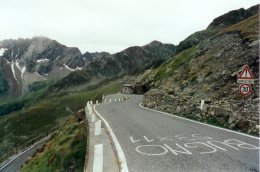
(Photo of the Passo di Gavia by Marco Mayer, some rights reserved.)
Tags: , ,

July 22, 2009

Foldable e-reader Readius provides last headlines

Filed under: Gadgets,Online by Branko Collin @ 4:34 pm

“Readius is dead” (CNet), “… goes under” (Washington Post), “… closes its doors” (Geek.com), “… files for bankruptcy” (IT Pro Portal)—news sites are struggling not have to use the headline PC World did: “Flexible eBook reader company folds.”

Polymer Vision, the Dutch display company that came up with the foldable electronic reading device Readius, has, as you may have inferred by now, filed for bankruptcy. CNet quotes CEO Karl McGoldrick as saying that the product itself may survive: “We are working hard to find new investors to take over and re-start and get our technology and product into the market, where it should be.”

There is some speculation among tech sites whether the arrival of the Amazon Kindle may have led to Polymer Vision’s demise, but that seems unlikely to me. The Kindle is only sold in the USA, and there is plenty of room for e-readers in the rest of the world. A more probable assumption is that the Eindhoven-based company has serious competition from recent, large screen mobile phones. Early press photos of the Readius suggested that the device was to be used by business people on the move for reading up on stock reports and news.

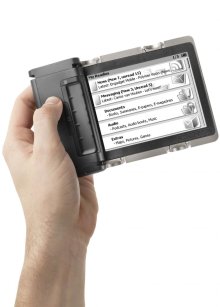
(Photo: Polymer Vision.)

Tags: , , , ,

July 21, 2009

Vote for the next Google Street View target

Filed under: Bicycles,Dutch first by Branko Collin @ 9:16 am

Google has had a tricycle custom built to take photos in locations that Street View cars and vans have difficulty accessing. They already had the trike take pictures in Italy and the United Kingdom, and now it is heading to the Netherlands.

If you like, you can vote which Dutch locations will get the Street View treatment, candidates include the old Parliament buildings, the Efteling theme park, and the Scheveningen boulevard which sports the only pleasure pier of the country.

(Link: Algemeen Dagblad. Photo of an Efteling dragon by Jeroen Kransen, some rights reserved)

Tags: , , , , , , ,

July 19, 2009

Inner city cargo train system in Utrecht

Filed under: Automobiles,Sustainability by Branko Collin @ 1:28 pm

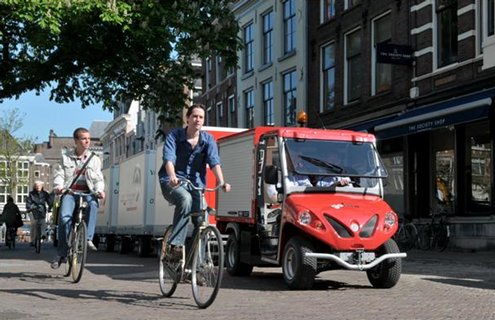
When I was a teenager, I had to bike through the narrow and windy cobblestone streets of a typically Dutch city centre to get to school, and part of that ride was spent waiting behind large, four-ton trucks delivering who knows what. Maybe it was 50 envelopes or a crate of tomatoes. It gave me the time to muse about a system where cargo was off-loaded just outside the city centre to smaller, horse-drawn carts for further distribution.

Although Utrecht-based company Cargohopper ditched the horse, they did implement this scheme for distributing goods to inner city stores to a tee. The small width, 1.25 metre, will surely lead to less irritation for the other road users.

Some figures from the company:

Cargohopper is a vehicle that can tow 3 metric tonnes in a linear line by means of a 48 Volt 28 hp electric engine. Its max speed is 20 km/h, but that is more than enough as it is only driving in the inner city of Utrecht and does not do more than 60 kilometres a day.

[…]

Once empty, it collects dry cardboard, paper and empty packaging from shops for recycling, so it never runs empty. In this way, Cargohopper removes up to 100,000 van kilometres from the inner city streets and saves about 30 tonnes of CO2 annually.

(Link: Autobloggreen. Photo: Cargohopper.)

Tags: , , ,

July 18, 2009

Amsterdam more affordable, except for parking

Filed under: Automobiles by Branko Collin @ 9:23 am

Amsterdam slid from 25th most expensive city in the world to 29th, according to a recent Mercer study, as Dutch News reports. The one cost with which Amsterdam tops every other major city in the world is parking.

Other Dutch cities did not even make it into the top 50, with Berlin being a ‘cheap’ European capital at 49—is East Berlin dragging that number down? The top three of the Cost of Living list this year are Tokyo, Osaka and Moscow, in that order.

Car owning visitors to Amsterdam* are out of luck though. According to Parool (Dutch), quoting a study by Colliers International, Amsterdam proudly leads the list of most expensive cities in the world when it comes to parking, with a daily rate of 70 USD. The second city on that list, London, only charges around 55 USD a day.

(more…)

Tags: , , , , , , , ,

July 16, 2009

Bookcase stores books in the shelves

Filed under: Design,Gadgets,Technology by Branko Collin @ 11:26 am

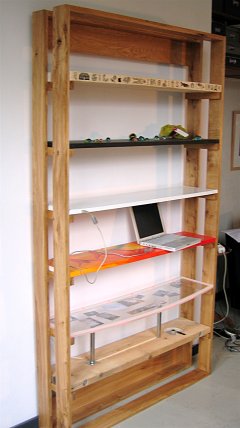
Upon his promotion, product designer Ianus Keller’s friends gave him this bookcase where every person had created one shelf. One of the shelves contains 1 GB of memory, and Ianus writes in this Bright.nl thread (Dutch) that he uses this shelf both to store books on and in.

The original Bright story was about a design by Marlies Romberg, recently graduated from the HKU (the U stands for Utrecht), called Dear Diary 1.0 and shown below. I am not sure though whether this is an elaborate case mod or a table with a memory.

Update: Marlies Romberg replied to an e-mail I sent her, saying the table is a case mod. For those who don’t speak geek-speak, this means that this is a complete computer with a customized case.

Source photos: Ianus Keller and Marlies Romberg respectively.

Tags: , , , ,

July 15, 2009

Lounge chairs in a park

Filed under: Architecture,Design by Branko Collin @ 9:30 am

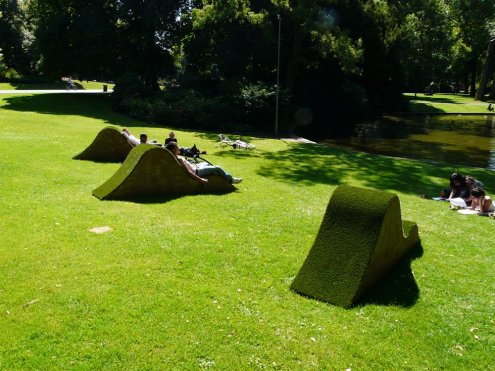
lawnge

These metal and plastic grass lounge chairs in the Valkenbergpark in Breda were made by designer Lisette Spee and architect Tim van den Burg, who hope to be able to make more of them.

(Link: Designboom. Photo: Tim van den Burg.)

Tags: , , , ,

July 14, 2009

Lotte Klaver’s mesmerizing sketches

Filed under: Animals,Art by Branko Collin @ 10:16 am

Lotte Klaver has been posting sketches to her blog since she was yay high, or at least yay old, so that by now, what with her prolific output, her online portfolio is big enough for grown art lovers to get lost in. In fact, she started her blog before we started 24 Oranges, and I remember thinking back then: “this would be a good posting for a site about wonderful Dutch things.” After which I forgot. Apologies for the delay, good reader.

She also sells tees singing praise of the wonderful bond between humans and cephalopods, and you just know there are people who are into that sort of thing.

Tags: , , , ,

July 13, 2009

Filter catches up to 66% of particulates

Filed under: Science by Branko Collin @ 11:43 am

A filter can remove up to two thirds of all particulates claims its developer (Dutch), Bob Ursem of the Technical University of Delft. Particulates are tiny particles of anything floating in the air, be it sand, salt, sulfuric acids, nitric acids, and so on, and are considered a health hazard.
Ursem’s invention works by electrically charging the particles. A negatively charged mesh, or anything that is grounded, will then attract the particles. Something as simple as a plant could act as the mesh.

Unfortunately, Ursem has patented his invention, so even if it works (two thirds of how much air?), it may not be deployed widely for the next 15 years or so.

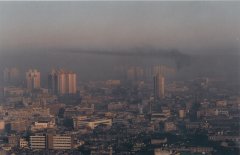
(Photo of a particulate polluted Shanghai sky by Wikimedia Commons user Saperaud, some rights reserved)

Tags: , , , ,

July 12, 2009

Writer Simon Vinkenoog dies age 80

Filed under: Literature by Branko Collin @ 11:17 am

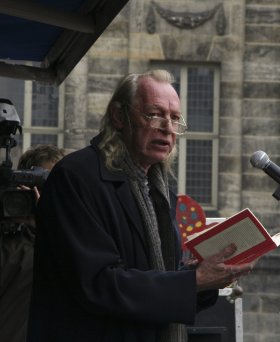
A week before his 81st birthday, writer Simon Vinkenoog died of a cerebral hemorrhage in Amsterdam last night. Vinkenoog was a poet, a writer of novels, and a strong proponent of the legalization of soft drugs. In 2004, when poet laureate Gerrit Komrij prematurely handed in his resignation, Vinkenoog was elected to serve the interim, until Driek van Wissen could take over.

Here is my pathetic attempt at translating one of the poems Vinkenoog wrote while in office:

Pamphlet

Pamphlet or quick prayer,*
love poem or protest song,
provided it is experienced,
grows wings, becomes redemption.

Once doom makes room
— for courage,
everything you do
becomes a living greeting:

“All that moves
will stay in motion
Make or break
— there is no choice

Nothing remains,
everything will disappear
your life a fireworks
or not.”

*) Note from the translator: what, no word for schietgebed (emergency prayer) in the English language?!

(Photo: Martijn S., some rights reserved, photo ‘shopped by me.)

Tags: , , , ,