


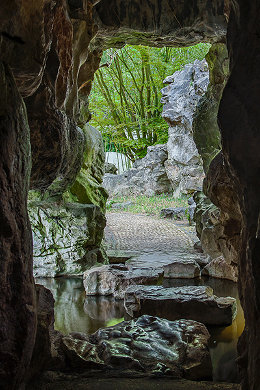
 Jip Moors and his father Holly went to the volunteer-run botanical garden in Haren and asked each volunteer what their favourite spot was. This led to an album of 16 photos by Jip Moors. Father Holly interviewed the volunteers and wrote the accompanying text.
The hortus botanica features amongst others a Chinese garden, a rock garden, an apple orchard and a bamboo forest.
The Hortus Haren was founded in 1626 in Groningen by pharmacist Henry Munting out of necessity—colleagues sent him plants from all over Europe and he needed a place to put them. Munting’s knowledge of plants grew enormously and at 1654 at age 71 he even became the first botany professor of the republic. Later, the Muntings had to sell the garden to the state because they couldn’t afford the upkeep, but they were hired for generations to tend the garden.
In 1917 the garden was moved to the nearby town of Haren because it was getting too big. The owners wanted to add new greenhouses for which there was no room at the inner city location. Currently the garden occupies 200,000 square metres.
(Photo: Jip Moors)
 The early 20th century was the heyday of Dutch polarisation. Unions, universities, newspapers, magazines and broadcasting corporations were founded, all based on a certain religion or ideology. The three main pillars were Protestantism, Catholicism and Socialism.
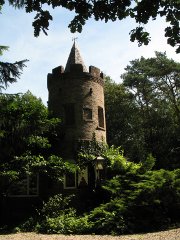
 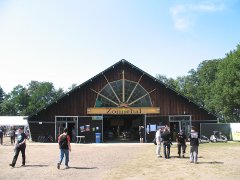 The little castle-like house shown in the photo above is called the Voorpost, and it predates the campground by a decade and a half. It was built as a Summer place of the Rolandes Hagendoorn family in 1906, and bought by the Arbeiders Jeugd Centrale (Workers Youth Center) in 1922.
  The grounds also hold a tiny wild life garden called Heemtuin de Heimanshof, which was founded by the AJC, and maintained by them for a long time. Although former AJC members still work on the garden, Jonge Socialisten (the youth branch of the socialist and social democratic parties) and other volunteers now help with the heavy lifting.
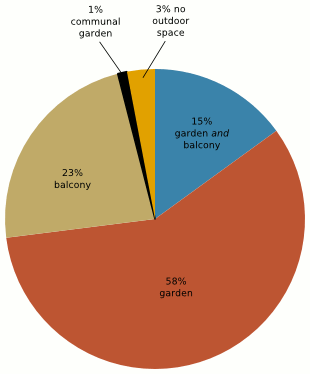 Ella Vogelaar, Minister for Housing, Neighbourhoods and Integration, wants to force builders to produce an outdoor space (balcony or garden) and bike shed for every apartment built. An earlier obligation to do so was dropped in 2003. Vogelaar claims the market insufficiently provides the need for outdoor living space and bicycle storage, and so she is making the provision of this part of the building code, the complex set of rules governing the construction of buildings.