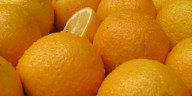


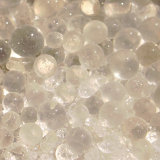
 A two million euro grant could see professor Alan Rowan of Radboud University turn so-called super gel into a band-aid on steroids (figuratively, of course).
The Nijmegen-based professor of molecular chemistry accidentally discovered super gel in 2013 when his team put a jar of polymers in the fridge. Instead of gelling, the polymers dissolved completely into water, but when the researchers took the jar out of the fridge, the solution turned into a gel again.
According to Kennislink the super gel “acts the same as the extracellular matrix (ECM) in the human body. This matrix is a network of molecules connecting the cells, providing fibres with both support and elasticity. The most important constituents of ECM are the natural polymers collagen and fibrin.”
Companies from all over the world sent professor Rowan their ideas of what the new gel could be used for, from letting sports bras firm up when the wearer gets warmer to slowly releasing pesticides after they have been sprayed on plants. “Companies want a finished raw material, but we did not know anything about the gel. We needed to know whether we can guarantee the quality, whether the polymer is poisonous, how long it lasts and if the human body can digest it.”
The two million euro grant was one of five grants awarded by the Netherlands Organisation for Health Research and Development (ZonMw) on 5 February.
(Photo by Wikipedia user Henningklevjer, some rights reserved; link: Radboud University)
 On Sunday 17 November the 30th edition of
  People who speak Dutch with a foreign accent are just as easy to understand as native speakers. Listeners may need a while to adapt to the accent, anywhere from a few sentences to a few minutes.
 The effects of the vegetarian pseudo-scientific
 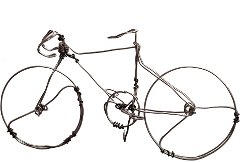 A man with Parkinson’s Diseased treated in the Nijmegen academic hospital recently demonstrated that he can ride a bicycle, but not walk.
