


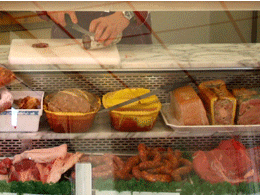
Singer Henk Westbroek praised the sausages of Wim van Beek in his column in De Pers yesterday. Van Beek was one of the last horse butchers of the Netherlands, and died last year. After a hiatus of three months, his son ewopened the business, and the man who is one of the founders of the 1980s Nederpop movement thinks the son’s sausages are as good as those of the father.
But there is a problem. According to Westbroek, the butcher only has a limited supply of horses. He only buys horses that are two year olds or younger, which usually are hobby horses with which the owner got bored. Nowadays, owners think it is “sad” that horses are killed for their meat, so they have the horses put to sleep (and presumably have the horses buried). And so the famous sausages of Van Beek in Utrecht are never on sale for long.
Update 12-3: the text of the column is now available in Dutch on Westbroek’s site.
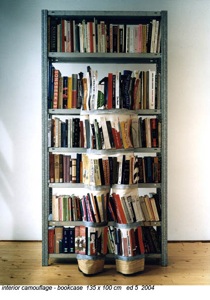 Two series of photos by artist Desiree Palmen from Rotterdam show people dressed in camouflage clothes that make them disappear against an urban, often indoor backdrop.
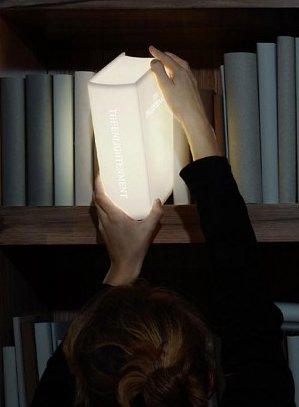 Ad agency Studio Meiboom in Harderwijk came up with this
  The frog once sang: it’s not easy being green. This
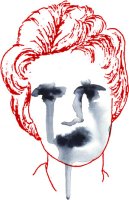 Paul Faassen is a cartoonist who juxtaposes techniques to make a point. I came across his work yesterday when I was reading an article in the online Volkskrant when something in the accompagnying cartoon (no longer available) drew my eye. It took a second but then I realized what it was: the faces of the two men men in the image were drawn fairly realisticly, but the rest of their bodies was sort of sketched in. The drawing reminded me most of connect-the-dot type drawings, where some details are already filled in. But instead of dots there had been empty space, which the child-like artist had filled in.
 Visitors to the Netherlands have noticed the phenomenon before, but now a judge has confirmed it: English has become common in the Netherlands. So common, that the use of an English word in a trademark no longer makes that trademark automatically unique. The owner of the “Runner Hardloopcentrum Groningen” trademark found this out last year when it tried to stop a competitor from trading under the name “Runnersworld” through the courts.
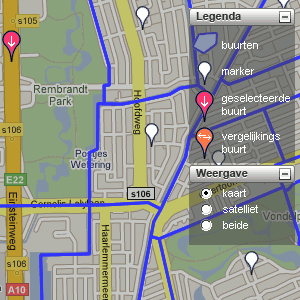 Statistics Netherlands (CBS, Centraal Bureau voor Statistiek), the government agency for statistical research, has launched a website called
 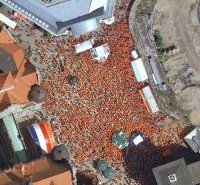 This image is a top down view of the Burgplatz (platz = square in German) in Leipzig on June 11, 2006 as seen on Google maps. We know the date, because all the people on the square are clad in orange, the colour that Dutch sports fans don whenever they wish to cheer on their national team. On June 11, the Dutch national football team was in Leipzig to play the team of Serbia-Montenegro during the 2006 world championships. The Dutch team won 1-0. (The red, white and blue flag across what I presume is the podium is a dead give away too, but probably not as visible from higher up as the orange square.)