

What is it with adventurers and gadgets? Do they need the distraction when all there is between them and a 2000-metre drop is an almost negligible amount of tent cloth? Or do they feel they have to be at the frontier of everything, including that of technological advances?
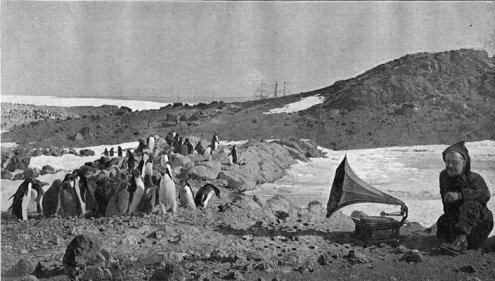
This photo shows an early iPod, 1909, used by Ernest Shackleton’s expedition to the South Pole. As you can see, there’s only one earbud—which is rather large, the idea being that the music might be shared with penguins this way. Shackleton failed his bid but did set a record for going farthest South. When he came back later that year, he wrote an article about his adventures which got translated into Dutch and published in De Aarde en Haar Volken.
My Nederlandse Project Gutenberg Reader for April (Dutch) dips into a number of translations, among which translations of the chapter Birds of Brehms Tierleben, of Durch das Land der Skipetaren (Karl May), and of Erasmus’ Morias Enkomion (The Praise of Folly).
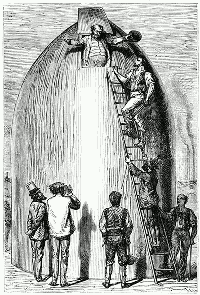 A couple of years ago a Project Gutenberg volunteer called Jeroen Hellingman managed to buy 25 public domain versions of Dutch translations of Jules Verne’s 54 “Voyages extraordinaires.” These books are working their way slowly through the Distributed Proofreaders digitization process and have started to appear at the other end, at gutenberg.org. The most recent
  I decided to make another Nederlandse Project Gutenberg Reader, containing the Dutch books that were released in the past month at the internet library. Once again you can find it
  I’ve made a sampler of the Dutch texts that were published at Project Gutenberg in August and September. In a month I want to attend the