


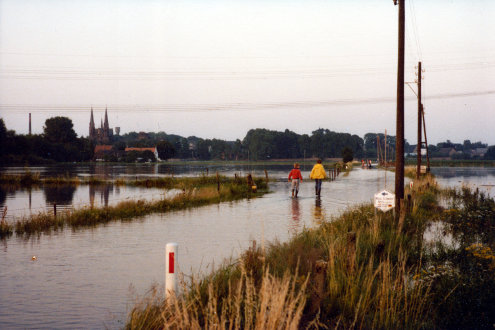
In the future, due to climate change and corresponding extremely high water levels, rivers in the Netherlands will be more likely to break their banks. This was the conclusion reached by Dutch researcher Suleyman Naqshband […]. River dunes in the major rivers of the Netherlands tend to persist and not flatten out, thereby increasing the risk of flooding.
River dunes in this case is the somewhat unfortunate name for sand structures at the bottom of the river. Apparently they are quite common in Dutch rivers. The university adds:
These river dunes can reach large sizes, growing to as much as one third of the total water depth. This restricts the flow of water, causing water levels in the area of river dunes to be much higher than in sections of the river in which they are absent. River dunes are also dynamic, growing rapidly in just a few days then flattening out or even disappearing completely at extremely high flow rates.
(Photo of the river Meuse overflowing in 1980: Martin Collin)


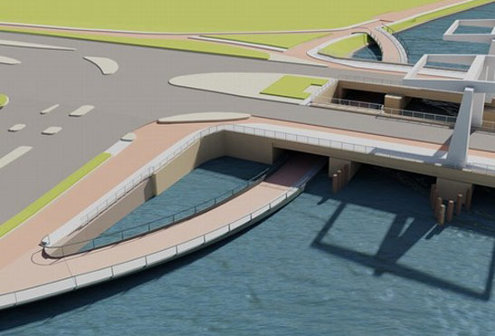
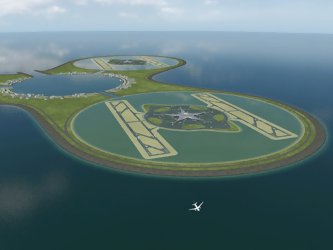 The way the Dutch viewed their national airport Schiphol has
 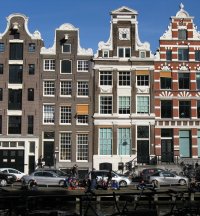 As you may know, Amsterdam was basically built in what can perhaps best be described as a swamp, and as it happens peat is not the best conceivable supporter for brick. Early Amsterdam residents got around this problem by driving huge wooden poles into the bog until it hit firmer ground and then building their houses on top of this wooden foundation.
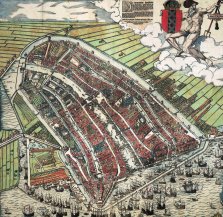 Amsterdam is 200 years older than is commonly assumed, says historical geographer Chris de Bont. The settlement was originally started in 1000 AC instead of 1200 AC, which is still pretty young. De Bont bases his conclusion on the patterns formed by old brooks. “I found the same patterns elsewhere in the region where farmers lived around the time,” De Bont told print daily Metro, “so it’s logical to assume that farmers also created the patterns in Amsterdam.”
 The national cannonball (“bommetje”) champion of this year is Freddy van der Pol who also won last year,

