


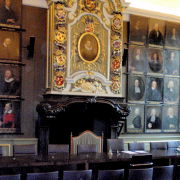
 Australian law blogger Kevin Jon Heller got his PhD in Leiden and describes the process of defending his thesis in a recent posting:
My casual attitude didn’t last long — only until I began to put on my tuxedo, complete with tails, in the room in which candidates change. My interlocutors for the viva, kindly known as ‘the opposition committee’, were changing on the other side of the room. The solemnity of the occasion finally penetrated my thick skull — this was my rite de passage into an academic tradition that had been taking place in Europe for centuries.
Once I had changed, Leiden’s pedel (registrar) explained the viva process to me and my two paranymphs, Mirjam and Bianca. The role of the paranymphs is now purely ceremonial; they sit and stand beside you during the viva. Traditionally, however, they served as the candidate’s protectors, intervening on his behalf if the opposition committee was being unfair or physically abusive (!).
The defense traditionally takes place in the Senaatskamer (Senate Room, 1733) which is adorned with portraits of the professors of the early days of the university and seats 64.
(Photo by Wikimedia Commons user Effeietsanders, some rights reserved)
 The Dutch legislation to safeguard net neutrality as it was originally drafted had an escape clause for filtering on ideological grounds, but that clause was struck when the Senate passed the new telecom law last week.
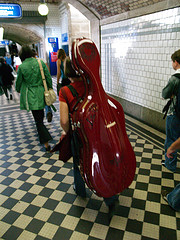
 Amsterdam based artist Sarah van Sonsbeeck came up with the Faraday bag, which is
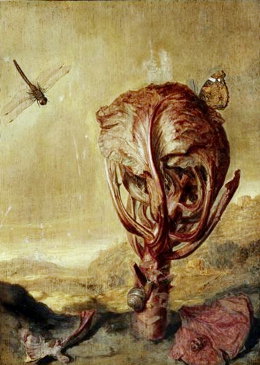 Margaretha de Heer painted this red cabbage sometime during the seventeenth century (she lived from 1600 – 1665 in Groningen and Leeuwarden).