May 22, 2008

Talking pillbox for the visually impaired

Filed under: Gadgets,Science by Orangemaster @ 7:55 am
pillbox1.jpg

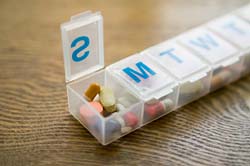
It’s not yet on the market (and it will look different than this picture), but two inventors from Breda, Noord-Brabant hope that it will be soon: a pillbox that reads the directions folders of medicine. Once the box is opened, it will start reading automatically. The box makes sure to state that it is medicine and not sweets, a good idea when children are around.

A text can be up to 4.5 minutes long, and a 60-second text can be read some 150 times.

Let’s hope that the direction folders are properly written (an issue about two years ago in the Netherlands), properly translated (always an issue) and not too long (nobody needs to hear an entire disclaimer in 27 EU languages).

(Link: rtl.nl)

Tags: , , ,

May 21, 2008

Mark Ho and his robot conquer America

Filed under: Art,Gadgets,Science by Orangemaster @ 9:12 am
ams.jpg

Mark Ho is an artist who thought up a bronze robot at a lonely time in his life. Just like in the movies, some rich American now wants to sell his art to the world, after having seen a photo of the robot on the cover of Scientific American.

The Amsterdam student at the Hoge School voor de Kunsten (HKU) has been working almost 12 years alone and in silence on the metal doll that moves like a human. Yesterday, he left for the US to talk to an investor about bringing his product onto the market. “At the HKU, sometime in 1994, we were given the assignment of making an animated figure from aluminium. Everyone knows those wooden dolls on the bookshelves. I wanted to make one from metal, but I had no idea how.”

After figuring out many details and even building his own tools, his first doll is now five years old. It consists of 920 parts and 80 mechanical parts. The creature, that answers to the name Artform No 1, can even move its shoulders. “A person is much simpler than this,” Ho laughs.

(Link and photo depers.nl)

Tags: , , , ,

May 9, 2008

New inkjet printer uses marbles

Filed under: General,Science by Orangemaster @ 10:45 am
oce-1.jpg

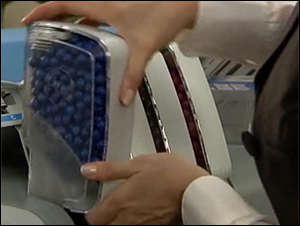
Dutch copier manufacturer Océ has introduced an industrial inkjet printer using CrystalPoint technology, which makes prints that do not smear when they are wet. The printer was nicknamed ‘knikkerprinter’ (‘marble printer’) by the local press because the ink is contained in tiny balls that are turned into a gel by the printer.

The technology has a ‘solid in, solid out’ principle. It uses small colour balls called ‘Tonerpearls’, which are contained in a transparent toner cartridge. The user can immediately see how much ink is left.

(Link: webwereld.nl)

Tags: , ,

April 29, 2008

Dutch student satellite makes it into orbit

Filed under: Science by Orangemaster @ 7:55 am
delfi1.jpg

The students at the Delft University of Technology have done something cool again: they’ve launched a satellite from India. A rocket carrying 10 satellites, including the students’ Delfi-C3, was launched from the Sriharikota space centre in southern India. Former air and space travel student Joost Elstak says the first contact with the satellite was made just after lift-off. “So, we know it’s working,” he explains. The satellite is only 30 cm long and not much bigger than a carton of milk.

The rocket is also carrying student satellites from Denmark, Japan, Germany and Canada.

(Link: radionetherlands.nl)

Tags: ,

April 22, 2008

Mumps epidemic aggravated by religious beliefs

Filed under: General,Religion,Science by Orangemaster @ 9:15 am
mumps1.jpg

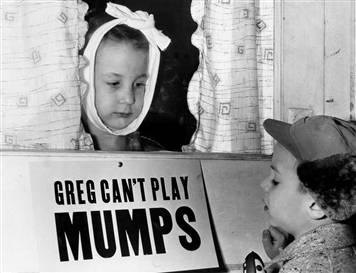
Monday, various media reported a mumps epidemic in the Netherlands for the first time in 20 years. The epidemic is concentrated in the stretch of land between Zeeland in the southwest and the Veluwe heathlands in central Netherlands, the so-called “Bible belt” (that’s what they call it in Dutch as well) where many orthodox Protestants live.

Many people in the area refuse to have their children vaccinated against mumps and other diseases on religious grounds.

Mumps have been diagnosed in more than 60 blood samples over the past few months but the public health institute (RIVM) said the real number could be much higher because doctors are not legally obliged to report cases to the authorities.

The “Bible belt” was also hit by polio and measles epidemics in the 1990s.

Other sources claim that these religious communities’ children have been vaccinated but that it didn’t really help, which is plausible. As well, some 75% of people according to an online poll think it should be forbidden to refuse to vaccinate children on religious grounds. One good point is that their sicknesses bring other people in danger, which is considered asocial at best in such a densely populated country.

(Link: eviewweek.com)

Tags: ,

April 14, 2008

Quacks get legal recognition

Filed under: Religion,Science by Branko Collin @ 11:01 am

Last Wednesday a trio of judges held that quacks are responsible for their diagnoses, and can therefore be prosecuted when something goes wrong. The case was brought by the Vereniging tegen de Kwakzalverij (Association against Quackery) and the Stichting Skepsis (Skepsis Foundation) against the public prosecutor, after the latter had decided to drop prosecution against two “alternative” physicians and “faith healer” Jomanda. The alternative healers had been accused of leading comedian Sylvia Millecam to her death in 2001 by steering her away from regular medicine. Millecam had been diagnosed with breast cancer, from which she died.

The court held (Dutch) that the association and the foundation had standing, and that care givers have a care duty, even if they are not accredited. This means that quacks who were able operate in relative safety in the Netherlands will now have to face the criminal consequences of their “healing” practices gone bad, just like regular physicians.

Via Wis(s)e Words.

Tags: , ,

February 20, 2008

The soothing smell of oranges

Filed under: Dutch first,Food & Drink,Science by Orangemaster @ 7:00 am
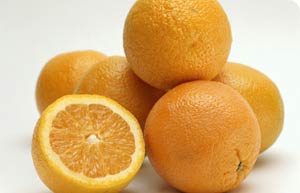
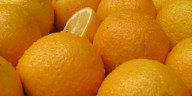
Oranges

The scent of oranges is being used in an experiment to create a calm atmosphere at Rotterdam’s main police station, reports news agency ANP. The tests, begun in January, aim to establish if workers find the atmosphere improved and prisoners are less aggressive, ANP reports the force’s in-house magazine as saying. Initial results show the orange scent is having a calming affect in the cells and that demand for sedatives is down, ANP says. The experiment is now being extended for a further six months.

(Link: dutchnews.nl)

Tags: , ,

January 19, 2008

High Dutch infant mortality rate has causes

Filed under: General,Science by Orangemaster @ 12:15 pm
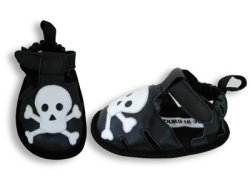
skull_shoes1.jpg

Two Dutch gynaecologists have published a report which shows that more babies die at night and on the weekend in Dutch hospitals compared with weekdays. At night, the mortality rate is nearly 25% higher, and 7% higher on the weekend.

The gynaecologists say it is due to the absence of gynaecologists. At night and on the weekend, deliveries are performed by assistants who are less likely to request the assistance of a fully qualified gynaecologist if there is not one around. This situation reportedly leads to the deaths of 35 to 40 babies a year.

The two gynaecologists write that the Dutch obstetric system is under pressure. Recently published EU figures show that infant mortality in the Netherlands is above the European average. The report’s authors also wonder whether the traditional Dutch emphasis on home deliveries is still acceptable.

Well, if you know you’re going to give birth at night on on a weekend, maybe you’d better do it at home after all, which is still where many Dutch women give birth. According to women I once met working for Access NL, an organisation that supports expats and the likes, one of the major cultural shocks between other Western cultures and the Dutch for many women is how pregnancies are monitored.

(Link: radionetherlands.nl)

Tags: , ,

December 14, 2007

Meat better for the environment than T-shirts

Filed under: Animals,Food & Drink,Science,Sustainability by Orangemaster @ 9:06 am
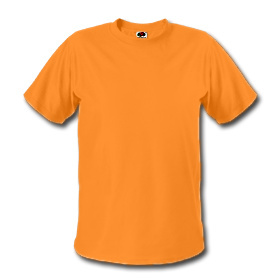
orange-tee1.jpg

According to the University of Twente, you’re nicer to the environment if you eat meat than wear cotton T-shirts. A cotton T-shirt takes 2,700 liters of water, while some 100 g of meat takes 1,550 liters of water and a cup of coffee 140 liters. The Wereld Natuur Fonds (World Wide Fund for Nature) plans to use the calculations in awareness-raising campaigns. “Per capita, the Netherlands uses a whole lot of very thirsty crops,” says the WNF. A Dutch person uses 100 litres of water from the tap, which is just a fraction of the 3,300 litres of water used daily in the consumption of many imported foods.

Last Monday, party leader Marianne Thieme of the Partij voor de Dieren (Dutch Party for the Animals) presented the climate film ‘Meat the Truth’, where the message was that eating meat is bad for the environment. Not so, if we believe scientists instead of politicians.

Drinking coffee is bad too because you waste water in someone else’s country (the study calls this ‘invisible water use’) and that goes for cotton T-shirts as well.

(Link: vleesmagazine.nl)

Tags: , , , , ,

December 2, 2007

Genever, not gin, is protected

Filed under: Food & Drink,Science by Orangemaster @ 1:50 pm
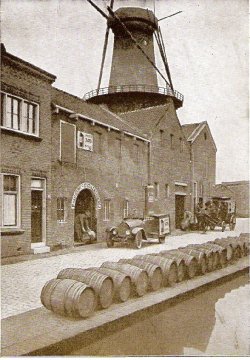
oudschiedam1.jpg

It’s called jenever in Dutch, referred to as ‘genever’ in English and the rest of the world calls it ‘gin’.

Jenever can only be made in the Netherlands, Belgium and a few German and French provinces. The ministers of agriculture granted jenever the status of protected geographic indication last Monday.

The Netherlands traditionally has a number of large jenever distilleries, in Schiedam (shown here), Amsterdam and Groningen, to name a few. In Belgium, Hasselt is the best known city for this strong alcoholic drink.

Read more about this underrated drink and if you want to visit Schiedam, the town with the five biggest windmills in the world, check out Ontdekschiedam.nu, a site I did some work on.

I read a few articles that said that the Dutch introduced gevener (gin) to Ghana through the slave trade some 150 years ago. It is still used for special occasions, but then the real Dutch variety, not the local moonshine.

A glass of jenever is at least 35% alcohol. Young jenever is the most commonly drunk spirit in the Netherlands: 170,000 hectolitres in 2005, according to figures from the Commodity Board for Alcoholic Drinks.

‘Jenever’ was discovered in the Middle Ages during the search for medicines: the medicinal juniper berry was added to brandy wine. These days grain or treacle from the sugar industry is the basis for the alcohol in ‘jenever’.

Agriculture minister at the time Cees Veerman suggested to his EU colleagues last year that ‘jenever’ be declared a protected product. There were no objections.

(Link: expatica.com)
Tags: , , ,