


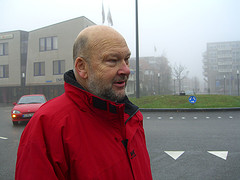
 Earlier this year, at age 62, traffic engineer Hans Monderman died of cancer. The Wilson Quarterly profiles the man behind Shared Space, the counter-intuitive idea that dissolving the artificial segregation of pedestrians, cyclists and drivers can make traffic safer.
And Monderman certainly changed the landscape in the provincial city of Drachten, with the project that, in 2001, made his name. At the town center, in a crowded four-way intersection called the Laweiplein, Monderman removed not only the traffic lights but virtually every other traffic control. Instead of a space cluttered with poles, lights, “traffic islands,” and restrictive arrows, Monderman installed a radical kind of roundabout (a “squareabout,” in his words, because it really seemed more a town square than a traditional roundabout), marked only by a raised circle of grass in the middle, several fountains, and some very discreet indicators of the direction of traffic, which were required by law.
As I watched the intricate social ballet that occurred as cars and bikes slowed to enter the circle (pedestrians were meant to cross at crosswalks placed a bit before the intersection), Monderman performed a favorite trick. He walked, backward and with eyes closed, into the Laweiplein. The traffic made its way around him. No one honked, he wasn’t struck. Instead of a binary, mechanistic process—stop, go—the movement of traffic and pedestrians in the circle felt human and organic.
What I assume to be Monderman’s own Youtube videos are still up. In them, he explains what Shared Space is:
Via BoingBoing. Photo by Jerry Michalski, some rights reserved. (See also my adventures with traffic wardens, and this bit about letting people choose their own paths.)

 Dear lazyweb. As I am a complete troglodyte in matters of taste and style—something I am obviously trying to mask by using fancy words for “caveman”—and I need to make myself a small cabinet to keep magazines in and drinks on, I find myself looking for “open source” furniture. And finding none. Indeed, the closest I am getting so far are the designs of
 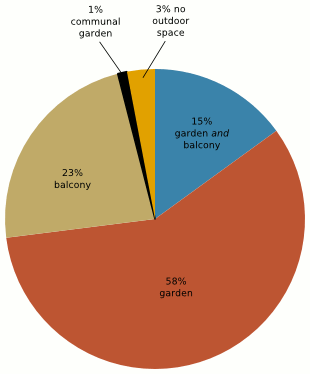 Ella Vogelaar, Minister for Housing, Neighbourhoods and Integration, wants to force builders to produce an outdoor space (balcony or garden) and bike shed for every apartment built. An earlier obligation to do so was dropped in 2003. Vogelaar claims the market insufficiently provides the need for outdoor living space and bicycle storage, and so she is making the provision of this part of the building code, the complex set of rules governing the construction of buildings.
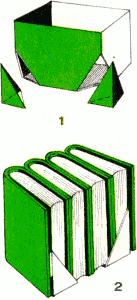 In the pre-internet age such bottomless founts of knowledge were a popular fantasy. The most famous among them being the Hitchhiker’s Guide to the Galaxy, which appears in the novel of the same name by Douglas Adams, and the Memex device by Vannevar Bush, which is widely credited as being the precursor of the World Wide Web. (An early version of the web was called Enquire, after the book about everything,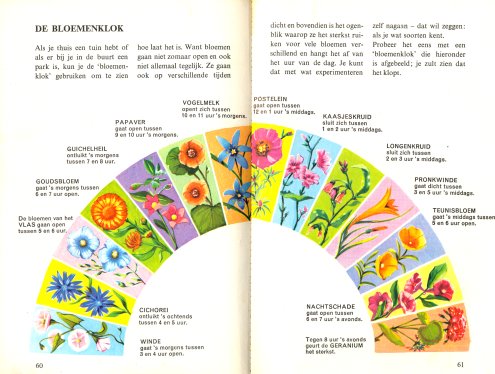
 Engadget writes:

 Arnoud Engelfriet is a geek turning lawyer, and a prolific blogger. That puts him a couple of notches ahead of other technology-oriented legal professionals in that he knows what he is talking about when discussing the meeting of law and technology. In September he will discuss this meeting a lot when he publishes his first book,