February 1, 2010

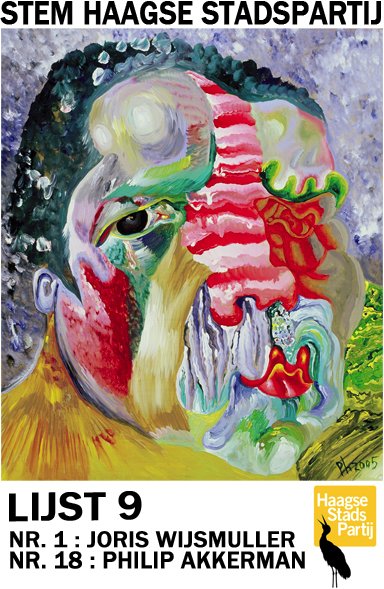
Cool poster for The Hague city council elections

Filed under: Art by Branko Collin @ 8:54 am

We try to stay away from politics, but when candidates come up with cool posters like this, it’s hard to ignore them.

Philip Akkerman made this. He is an artist and a ‘list pusher‘ for the Stadspartij of The Hague. Municipal elections take place every four years, and the next one is on March 3. Several 24 Oranges commenters, by the way, will be running for office this year.

Link: Trendbeheer.

Tags: , ,

January 31, 2010

25 years of Tex-Mex in the province: Rowwen Hèze

Filed under: Music by Branko Collin @ 2:47 pm

For a long time the band Normaal symbolised music from the sticks, the ZZ Top of the Achterhoek (literally: back corner) sang in their local dialect about beer, women, and any combination of the two. Then in 1985, the Limburg band Rowwen Hèze was founded, and suddenly people were speaking of a trend.

Like Normaal, Rowwen Hèze makes good party music, based oddly enough on the continental immigrant music of the United States: Tex-Mex, polka, fanfare, Irish folk. They take standards (or songs that sound like they ought to be) and add silly local texts to them: Enselma becomes Bestel Mar (order up), and Ay Te Dejo En San becomes Kroenenberg (a place name). Of course, when they sing Los Lobos’ and Flaco Jimenez’ songs, they invite these guys onto stage too.

The other side of Rowwen Hèze (named after a local tramp) is introspective:

Saint Anthony was said to know
— dear friend, he wrote, it is true —
it can be better to lose something beautiful
than to never having had it before

(Link: AD.nl)

Tags: , , , , ,

January 30, 2010

Loyalty schemes yield higher rewards than savings accounts

Filed under: General by Branko Collin @ 1:43 pm

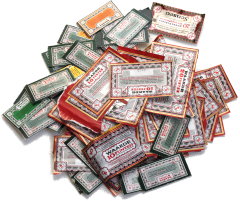
Z24 points out that collecting so-called supermarkt saving stamps can yield a considerably higher interest rate than even the best savings account at a bank.

Plus supermarket has an advantageous scheme where every two euro put in gets you three euro in return.

Saving stamps schemes work by letting consumers buy stamps for every euro of groceries bought. These need to be pasted onto a card, and once the card is full, it can be exchanged for cash. Plus’ generosity is easily explained, as they will let you only buy 2 cents’ worth of stamps for every euro you spend on groceries.

Albert Heijn has a scheme where you can get a 10 cent stamp for every euro you spend, and after 490 stamps you can exchanged your card for 52 euro. That is a 6% interest rate, paid out after only two or three months of shopping for a single person household.

Recent changes to Dutch tax law included a tax on property of about 1%. Interest on savings accounts these days (typically between 1 – 3%) is so low that it doesn’t even counter inflation. Z24 suggests that supermarket savings plans are therefore much better, because not only do they use higher interest rates, they also represent cash and therefore stay under the radar of the tax man. The argument is silly though, as property tax is only paid over property additional to the first 30,000 euro you own, whereas saving stamps will typically only account for a couple of hundred euro each year.

The Dutch are eager participants in loyalty programmes. Here are some of the things we participate in:

  • Spaarzegels (saving stamps), outlined above.
  • Spaarpunten (points), schemes like Airmiles, where you save for products you can get from a catalogue. In some schemes, having enough points will get you stuff for free, in others they will merely help reduce the price of a product, typically used by both supermarkets and brands.
  • Coupons, vouchers distributed in magazines or news papers, where you can get money off of specific products, usually for a very short period (like one or two weeks). Used by all kinds of stores.

The only scheme I ever participated in was one by a local supermarket chain called Groenewoud, where you got free points for every purchase, and after you had collected enough of them, they gave you a plant. Exactly my speed.

What loyalty programmes are popular where you are?

Tags: , , ,

January 28, 2010

City shaped serving bowls

Filed under: Design,Food & Drink by Branko Collin @ 9:31 pm

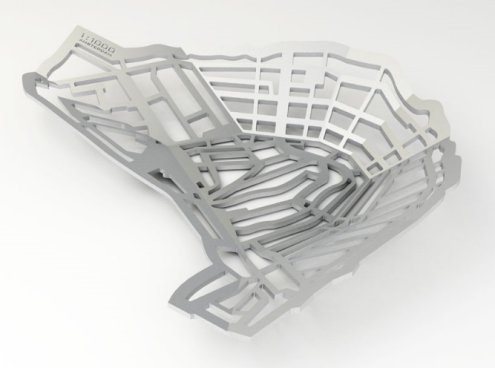
The Metrobowl is a serving dish by 2001 Eindhoven Design Academy graduate Frederik Roijé shaped in the form of a city map.

Frederik has made two models, one based on Amsterdam (the semi-circular onion skin lines are the famous canals), and one based on the grid of Manhattan. The bowls are made of cast aluminium, cost 200 and 240 euro respectively, and are sold by Frederik himself through his on-line shop.

For another map of Amsterdam’s city centre, see also: Amsterdam 200 years older than previously believed.

(Via: Dornob.com. Link tip: Tom. Thanks, Tom!)

Tags: , , ,

January 25, 2010

Soviet airplane turned into hotel room

Filed under: Architecture,Aviation by Branko Collin @ 11:26 am

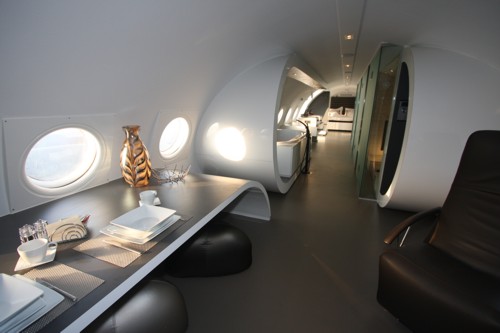
This is the inside of a popular Soviet era airliner, the Ilyushin Il-18, which was turned into a big hotel room at Teuge Airport.

It’s got a whirlpool, separate shower, infrared sauna, mini-bar, 3 flatscreen TVs, and so on.

For more remarkable hotels in the Netherlands, see here.

(Source photo: Hotelsuites.nl. Link and more photos: Gizmodo)

Tags:

January 24, 2010

Tallest building of the Netherlands cancelled

Filed under: Architecture by Branko Collin @ 2:20 pm

Plans for a 262-metre-high skyscraper proposed for the Utrecht neighbourhood Leidsche Rijn have been scrapped, Volkskrant reports. The city of Utrecht felt the risk of such an undertaking was too high in this time of crisis.

The building, which would have housed both apartments and offices, raised a storm of protest when it was first proposed. People feared that because of its height it would have been visible from as far as 60 kilometres away, dominating the view all around Utrecht. The general contractor was informed of the municipality’s decision earlier this year.

The skyscraper, designed by Architecten Cie., would have been called Belle van Zuylen after a Dutch renaissance writer of the same name who used to live in nearby Castle Zuylen.

The tallest structures in the Netherlands overwhelmingly remain masts for transmitting radio and TV signals, according to Wikipedia. The tallest habitable tower is the Maastoren in Rotterdam, at 152 metres.

(Source image: Architecten Cie. Project website: bellevanzuylen.info)

Tags: , ,

January 23, 2010

Judges plagiarize blog posting in copyright case

Filed under: Online by Branko Collin @ 1:25 pm

Embedding is a form of publication, and therefore infringement if it happens without permission, Dutch judges Brandenburg, Huijbers-Koopman and Struik concluded two weeks ago in an infringement case. Oddly enough, their judgement seems to hinge on the court’s conclusion (Paragraph 4.99, PDF) that “in case law and legal literature it is generally held that an embedded link constitutes a publication. After all, the material can be viewed or heard within the context of the website of those who placed the link, and placement causes the material to reach a new audience.”

The court seems to have borrowed this quote literally and without attribution from a blog posting by SOLV lawyer Douwe Linders who, according to Webwereld, said that “it looks a lot like copy and paste.” Since it is literally copy and paste, not just a lot like it, it sounds like Linders was unaware that the court had copied him, and that he had not given the court any permission to do so.

Although Dutch copyright law does allow you to quote bits of a work for a number of reasons, it does not allow you to do so without attribution. Further, by pretending the court had written this bit itself, the judges also plagiarized Linders’ words, which is a much more serious offence in my opinion (although, unlike copyright infringement, not actually illegal).

I have never heard before of a copyright infringement case in which judges infringe copyrighted myths and present them as fact in order to bury alleged infringers. This stinks in my opinion, but then I am not a lawyer. Perhaps in their world this is how roses smell.

According to Webwereld, the court’s argument “has caused consternation in copyright land.” Although I agree with Linders’ opinion that embedding generally constitutes a form of publication, the debate about this is far from over, as the comments collected by Webwereld attest.

(The literal Dutch text by Douwe Linders: “In de rechtspraak en juridische literatuur wordt betrekkelijk eensgezind aangenomen dat een embedded link wel een openbaarmaking inhoudt. Immers, het materiaal is dan te bekijken of beluisteren binnen de context van de website van degene die de link heeft geplaatst en door de plaatsing wordt over het algemeen een nieuw publiek bereikt.”)

Tags: , , ,

January 19, 2010

Design for a bank in Ethiopia

Filed under: Architecture by Branko Collin @ 8:38 am

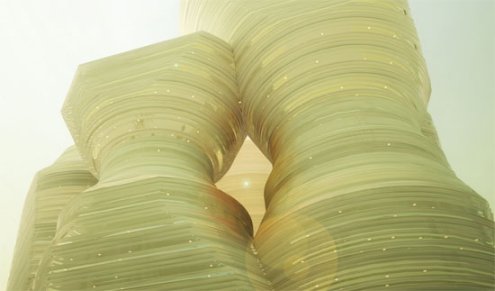
OIII Architects from Amsterdam designed this bank building for a competition for a new bank in Addis Ababa, Ethiopia.

In the end, it was the design of German architects Henn that won, but the OIII entry still looks pretty amazing.

(Link and source image: Designboom.)

Tags: , ,

January 18, 2010

Kyteman wins Popprijs 2009

Filed under: Music by Branko Collin @ 11:02 am

Kyteman’s Hip Hop Orchestra won the Popprijs 2009 (‘Pop prize’) in Groningen last Saturday.

The 12-piece-band won one of the most prestigious pop music awards of the Netherlands for its contributions to the genre. The chairman of the jury, Hans Kosterman, called the orchestra “authentic, a source of inspiration, strong-minded and very successful.”

The prize consists of 10,000 euro and a statuette. The annual award was introduced in 1986, when it was given to singer Mathilde Santing. Despite having 10 MCs, the band is perhaps best known for its instrumental, Sorry.

(Link: Parool. Video: Kyteman.)

Tags: , ,

January 17, 2010

Political feed aggregator

Filed under: Online by Branko Collin @ 3:06 pm

Polifeeds.nl brings together all tweets and blog posts of Dutch politicians.

The site is an initiative of Geen Commentaar, the blog that earlier created a coalition checker and a parliamentary search engine. Although the default mode delivers an inane cacophony of local and national news, blog posts and tweets, the Advanced Search function lets you narrow the stream of opinions down to only what you need.

Tags: , ,