September 26, 2013

A warm and fuzzy lamp without drilling holes in the wall

Filed under: Design by Orangemaster @ 3:00 pm

My co-blogger Branko thought of me right away when he saw the Wooll-e, a lamp I could have in my way too dark office without drilling holes in the wall, which I’m not allowed to do.

No more need for screws or nails as wooll-e is a unique ready to hang lamp. The wooll-e is a lamp that doesn’t require any tools. Only a power outlet and blank wall space. Designed to be quick-‘n- easy. No more drilling holes in your walls. Simply stick the wooll-e discs on your wall and the wooll-e FIX will do the rest!

The felt sleeves of the wooll-e (hence the name is my guess) are handmade from 100% Dutch wool. Even the power cords come in different colours. For 5 euro of funding towards this Indiegogo crowdfunding project, you’ll get a thanks, and for anything starting at 95 euro, you get a lamp with combo packs going for up to 210 euro.

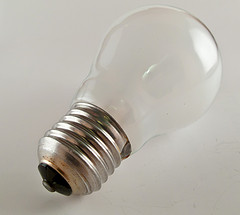
(Link: www.indiegogo.com, Photo of Lightbulb by Emil Kabanov, some rights reserved)
Tags: , ,

September 15, 2013

Moving meeting room looks like a stealth plane

Filed under: Art,Design by Branko Collin @ 11:14 pm

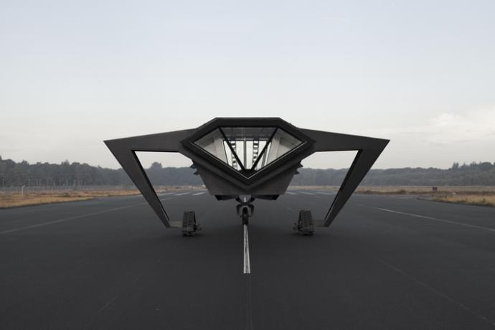
Secret Operation 610 is an artwork created by Rietveld Landscape and Studio Frank Havermans that doubles as a meeting room.

The artwork consists of hangar 610 at former Dutch airbase Soesterberg (hence the name) and of a vehicle that looks a bit like an F-117 Nighthawk stealth fighter plane.

The creators, Frank Havermans and Ronald Rietveld, told Volkskrant that they had been asked to create a piece of furniture for the hangar. “But if we had created something that was attached to the hangar that would mean the building itself would be compromised, which we did not want. So we started joking about furniture on wheels. At first that did not sound realistic, but before we knew it we had bought a plane wheel from a dealer in Oss and we could not turn back.”

The vehicle can be driven slowly over the air strip using a joystick. Havermans and Rietveld are open to renting out the vehicle as a mobile meeting space. “As long as people don’t turn it into a beer shack.”

Secret Operation 610 is one of the art works that were created to celebrate the 300th anniversary of the Peace of Utrecht. The work was revealed during Festival De Basis which started yesterday and which will last until Sunday 22 September. Airbase Soesterberg was closed in 2008 due to cuts in the Dutch defence budget.

A video showing the unveiling of the project and some of the other works at the former airbase can be seen at De Utrechtse Internet Courant.

(Photo: Rietveld Landscape)

Tags: , , , , ,

September 14, 2013

Phonebloks, a modular open mobile phone platform in search of manufacturers

Filed under: Design,Gadgets,Sustainability,Technology by Branko Collin @ 11:43 am

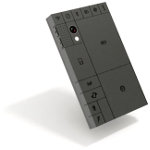
Eindhoven-based inventor and designer Dave Hakkens is a man of ideas and his latest idea, a mobile phone of which you can swap out parts when they break down or get too old, is getting a lot of attention on the Internet.
The idea behind Phonebloks is to commoditize the hardware behind the mobile phone in such a way that not manufacturers but consumers get to swap out parts—a sort of Lego for mobile phones. There would have to be a ‘Blok-store’ where you could order the parts you want (at a suitable mark-up of course) all the while feeling good about yourself for not throwing out your entire mobile phone when you get tired of parts of it.

Hakkens seems to have learned from a previous project, a power strip called Plugbook, which he ran on Kickstarter but which failed to reach its target. In order to show your interest in Phonebloks you do not have to pledge your own money. Instead you voice your support via Thunderclap in the hope that manufacturers and investors will sit up and take notice.

(Via my Facebook page where people were ‘liking’ the damn thing by the boatloads. Illustration: crop from Dave Hakkens’ video.)

Tags: , , ,

August 22, 2013

Creative camping in fancy design objects

Filed under: Design,Nature by Orangemaster @ 10:47 am

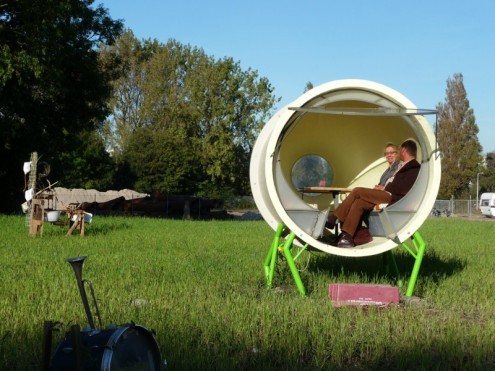
From 16 August to 30 September visitors can stay in one of the ‘creative shelters’ created by contemporary industrial designers. Each of the 15 mobile units on the campground are equipped with a comfortable bed and some of them have a bit more space that doubles as a small living space. The accommodation shown here is ‘Polaris’ designed by Boris Duijnevel of MUD projects.

Prices range from 20 to 80 euro a night, depending on the accommodation, and in the Story Caravan designed by Nancy Wiltink, she’ll throw in a bedtime story for an extra 55 euro between 10-11 pm that is either romantic or filled with horror so you will ‘sleep poor’, most probably no pun intended, just bad English (it should be ‘poorly’, Dutch adjectives and adverbs are often written the same way).

In addition, urban campsite offers guests a zone for campfires, hammocks to relax, a wood-fired sauna, and a picnic spot in front of each installation. the site also provides the visitors with general amenities — a restaurant, a well-stocked shop, laundry and a shower. the creative expression stop stop at the art objects: temporary photo exhibitions will be shown on the grounds, one of the fields will be arranged as a sculpture garden, and the terrain’s decoration will be changed regularly.

(Link: www.designboom.com, Photo of Polaris by MUD projects)

Tags:

August 9, 2013

Solar-powered bicycle lights made in The Netherlands

Filed under: Bicycles,Design,Sustainability by Orangemaster @ 8:00 am

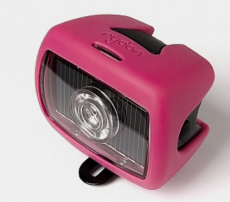
The Pixio bike light has a built-in solar panel with a battery that charges up during sunny days when a bike is parked outside. Five days is enough for two years of biking with the lights on and the Pixio is already good to go for two years of biking with the lights on when you buy it. It comes in a range of colours, and a set of Pixios (back and front, as the law requires) will set you back 55 euro, but then those cheap bike lights and their batteries will run you a lot as well in the long run, never mind the stress they cause. It even has a locking mechanism so you can actually leave it on your bike, as long as your entire bike doesn’t get stolen or removed.

One obviously drawback is if you leave the lights on by mistake, but then that goes for battery-powered lights as well. Raise your hand if you’ve turned off someone else’s bike lights off as a courtesy. Parking your bike indoors like many people do won’t charge your light up, but then if you’re good to go for two years, you can cross that bridge when you get to it.

(Link: www.bright.nl, Screenshot: Rydon.eu)

Tags: ,

August 8, 2013

Kickstarting Dutch ideas: inventions and culture

Filed under: Bicycles,Design,Film,Sustainability by Orangemaster @ 8:35 am

If you want to feel like an investor, maybe even invest in a project or just browse to get some ideas, have a look at these Dutch projects on Kickstarter. At first glance, films, software and design/inventions seem to be major categories, but I also saw some well-funded music.

Amsterdam: The Belll (yes, extra l), got funded. A customisable, loud, Dutch-made clip-on bell for your bike.

Groningen: The Last Holdouts: ‘One couple’s journey from Antarctica to Holland: A documentary about impossibility and the creative process’.

Amersfoort was the busy city at the time of writing, with three projects vying for cash, although one stood out: Doodle 3D, a sketching tool to print your own personal drawings on a 3D printer.

See also:

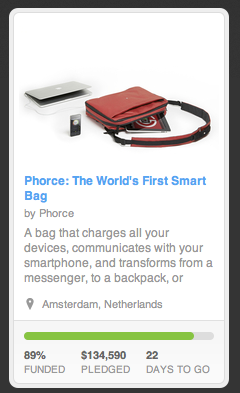
Charge your gear on the go using your travel bag (older pic above).

Two inventions—a charger in a safe, and a power strip in a book (and a bonus invention).

(Screenshot: Kickstarter)

Tags:

July 26, 2013

Cleaning up the ocean, a young Dutchman’s vision

Filed under: Design,Sustainability by Orangemaster @ 7:00 am

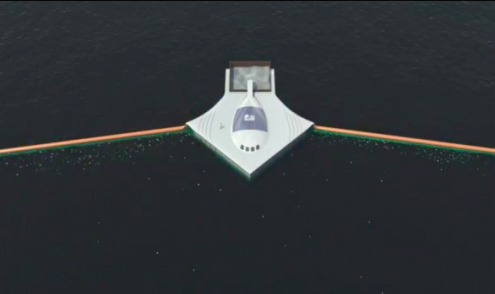
We’ve mentioned wunderkind Boyan Slat a few times and it has always involved water and pushing boundaries. This time, at 19 years of age, he’s been making waves internationally with his Ocean Cleanup Project, which aims at ridding the world’s oceans of plastics. The best thing to do is just watch the video and let him tell you what his plans are.

Problem: The plastic is not static, it moves around.
Solution: Why move through the oceans, if the oceans can move through you?
Fix the sea water processors to the sea bed, and save vast amounts of funds, manpower and emissions.

In his bio, Slat says: “It will be very hard to convince everyone in the world to handle their plastics responsibly, but what we humans are very good in, is inventing technical solutions to our problems. And that’s what we’re doing.”

This fits in with my personal philosophy that using guilt, shame and other negative emotions to force people to do something positive is not the way to go. I am already looking forward to the rest of Slat’s career.

(Link: m.parismatch.com, Photo: screenshot of Tedx presentation)

Tags: , ,

July 24, 2013

Fly your own drone-like favourite objects, DIY style

Filed under: Design by Orangemaster @ 8:49 am

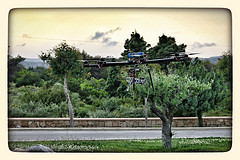
With this kit, you can turn your favourite object into a drone (the popular term) or actually an UAV (Unmanned Aerial Vehicle), as designer Jasper van Loenen explains.

As of 1 June 2013 you no longer need to have a permit to use a drone (thanks big corporations), so it’s time to get your favourite items up and flying. Allowing satellite pictures be made of the entire country, but then fining drones that take pictures for spying was finally considered obsolete.

Many of the parts in the kit can be created with a 3-D printer. Van Loenen made the printer files available, so that people can get into DIY mode with 3-D printing. About the printed parts, he said, “I recommend printing them in ABS or something similarly strong and durable. I printed them in ABS with a fill of around 50 percent and a rectangular mesh, but I think printing them with slightly more fill might be better. It will not increase the weight that much (all the printed parts are pretty light) and might increase the strength quite a bit.”

(Link: phys.org, Photo of Drone by Karen Axelrad, some rights reserved)

Tags: , ,

July 21, 2013

Cardboard dividers nets HEMA design award

Filed under: Design,Dutch first by Branko Collin @ 9:25 pm

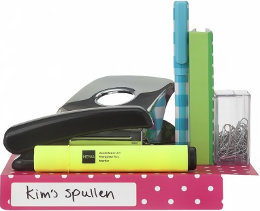
The 2013 HEMA design award was won by Tessa Eising, a student at the University of Twente, for her laminated rectangular cardboard space dividers.

The dividers have one folding edge at both one short and one long side with a label you can write on. The idea is that you put them in a cupboard, fold the edge, write your name on it, and put your stuff on it. As we wrote a couple of days ago, Dutch students often share a flat because of the high rents and they often need to figure out ways to determine who owns what. (In my student days, we shared most of the food and wrote our name on the packaging in the rare cases we needed to reserve something for ourselves.)

Another nominated design that I liked is Kim Monster’s ‘spider’ which you screw onto a standard soda bottle filled with water. Put the bottle ‘feet first’ in a planter and you’ve got a drip for your plants. There is also the travel bottle by Zsolt Hayde with two caps, one for dispensing whatever cream you put into it, the other for cleaning it when it’s empty. Handy for these paranoid times where governments won’t let their electorate onto planes with full bottles.

The HEMA design contest is held every year by the department store of the same name. Winning designs sometimes end up in the store, and it seems that first prize winners are sold through HEMA’s web shop. I have seen 2011’s winner Vrachtpatser, an extension for your bicycle’s luggage rack, in the wild a couple of times. This years prizes were awarded at a ceremony held 11 June at the OBA, the Amsterdam public library.

(Photo: HEMA)

Tags: , , , ,

July 20, 2013

How Heineken branched out into bricks for a short while

Filed under: Design,Food & Drink,Sustainability by Branko Collin @ 11:36 pm

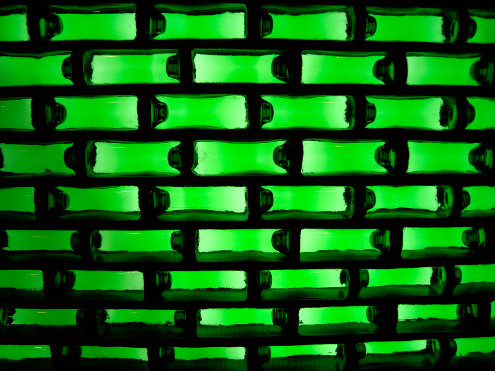
In the 1960 Dutch beer brewer Heineken came up with the idea of using rectangular, stackable beer bottles thinking that they could be re-used as building materials.

Cabinet Magazine writes how Freddy Heineken got the idea when visiting Curaçao in 1960:

[Heineken] noted with dismay the acres of trash underfoot—a good part of it produced by his own company. Heineken Breweries had an efficient bottle-return system in Holland, where the average bottle was used 30 times before being discarded. But without modern distribution, bottles in Curaçao were used once and thrown out. There was no lack of resulting trash: what the island did lack, however, was affordable housing. Heineken had a flash of brilliance: make beer bottles that you can build houses out of.

An initial bottle design by architect John Habraken—a long slender bottle to be stacked vertically—was vetoed by Heineken’s marketing department for being too ‘effeminate’. The second design was the squat bottle you see in the photo. Of this 100,000 bottles were produced and even a prototype shed near Freddy Heineken’s villa in Noordwijk.

(Photo by greezer.ch, some rights reserved)

Tags: , , , , ,