


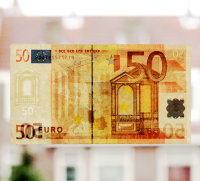
 In 2007 the Dutch mint started with a pilot project that made it the first in Europe to print money using cotton for which the producers have not been exploited. So far, the 20 and 50 euro bills produced by De Nederlandsche Bank have contained 10 to 14% fair trade cotton.
Paper factories prefer blends of cotton, and according to the mint (PDF, Dutch) “currently there is not enough good fair trade cotton to make up 100% of a bill. But the fair trade cotton market is growing spectacularly.”
The use of fair trade cotton in Euro notes is the result of a bet that the youth chapter of Christian union CNV made in 2005 with the Minister of Finance at that time, Gerrit Zalm.
(Via the print version of De Zaak.)

 Supporters of populist politicians use the phrase “You’ve got my vote” far more often than anyone else.
  Funk band
  NVPI, an organisation representing the ‘Dutch’ entertainment industry*, recently called for harsher measures against legal copying in the Netherlands, pointing out that there is a ‘sufficient’ supply of stores offering really legal downloads**. However, as Internet lawyer Arnoud Engelfriet points out, they are stretching the truth a bit.
  The
The 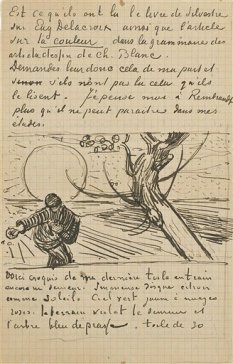 English translations of Vincent van Gogh’s letters to his brother Theo have been released in a 6 volume boxed set by the Van Gogh Museum in a 15-year-long cooperation with the Huygens Instituut. The original letters in French and Dutch have also been reproduced.
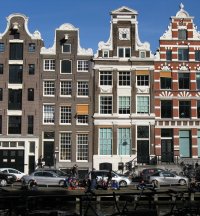 As you may know, Amsterdam was basically built in what can perhaps best be described as a swamp, and as it happens peat is not the best conceivable supporter for brick. Early Amsterdam residents got around this problem by driving huge wooden poles into the bog until it hit firmer ground and then building their houses on top of this wooden foundation.
 A tour company in Amsterdam claims it wants to hire alcoholics as guides,