
April 24, 2010

Dutchman ‘accidentally’ buys historic German bridge

Filed under: Architecture,History by Branko Collin @ 1:44 pm

Toni Bienemann from Arnhem is an avid collector of vintage cars, but having acquired about 40 automobiles he decided it was time for a change. And so he bought an old rail bridge in Germany—only to find out that this particular bridge is a symbol of German reunification. The Germans would get very upset, for instance, if he were to strip the thing for scrap metal.

Bienneman told Duitslandweb:

I had expected perhaps a small article in a local news paper, but not this much attention. Spiegel, ORF, Berliner Zeiting, they all called me to ask me why I bought the bridge. So I told them a story which I had made up afterwards. Originally, the bridge just seemed a nice symbol for my company, Dutchi Motors.

The Dömitz rail bridge (1873) used to be one of the longest bridges in Germany. It spanned the river Elbe, and was bombed by the alies in World War II. Afterwards, one side of the bridge became East German territory and was scrapped.

Wendland-net faithfully reproduces some of Bienneman’s spin:

“It would have been a pity if such a symbolic bridge had fallen into the wrongs hands.” This is the fear that drove Toni Bienemann […] to buy the historic construction for 305,000 euro from Deutsche Bahn in an auction.

Bienemann has now proposed the Germans come up with suggestions on how he could use the bridge in such a way that its symbolic value won’t get lost. He doesn’t need to make much profit right away, according to Duitslandweb, but if running the bridge is going to take him too much time, he will sell or lease it. Some of his own suggestions are to turn it into a bicycle bridge and run an ice-cream stand from it.

(Link: Sargasso. Photo by R. Kirchner, some rights reserved.)
Tags: ,

April 10, 2010

Oldest family-owned company of Amsterdam may leave the city

Filed under: Food & Drink,History by Branko Collin @ 5:09 pm

Spice trader Van Eeghen, founded in 1662, has put its Amsterdam office up for rent. According to Parool, the oldest family-owned company of Amsterdam is even considering leaving the city.
Van Eeghen is housed in the Sweedenrijk building on Herengracht 462, smack in the middle of the Golden Bend, an extension of the Herengracht created in 1663. Prospective owners were encouraged to buy double lots, with the result that the city’s most affluent would build their little palaces there.

“Nothing lasts for ever,” Willem van Eeghen (14th generation) told the paper. Most of the company’s activities take place in Canada these days, and only 20 people work at the Amsterdam office. The first two floors are now for rent for 250 euro per square metre, per year, which I am guessing is a steal for that location. If the right offer comes along, the company will even consider moving out altogether.

Perhaps the neighbourhood isn’t what it used to be. To the right of Van Eeghen is lawyer Bram Moscowicz, whose nickname is ‘maffiamaatje’ (mob buddy), and two doors to the left is a subsidiary of internet mogul Yahoo, supplier of dissidents to torture chambers since 2005.

According to Wikipedia, the oldest still existing company in the Netherlands is Brand (beer, 1340), although that example neatly displays the major flaw of that list: these days Brand is merely—nomen est omen—a brand of Heineken’s.

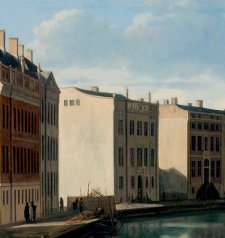
The image is a detail of Berckheyde‘s famous De Bocht van de Herengracht, painted in 1671. Sweedenrijk is in the middle of the frame, with Moscowicz’ slither attached to it. As you can see, the lot to the left was still unoccupied that year.

Tags: , , ,

April 9, 2010

Holocaust survivor finally to receive Dutch apologies

Filed under: General,History by Branko Collin @ 3:23 pm

Selma Wijnberg (87) was the only Dutch survivor of the Nazi concentration camp Sobibor, but the Dutch government once almost made sure that even she would not have had that distinction.
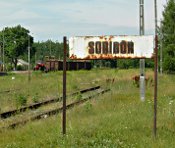
Wijnberg managed to escape the death camp in Poland in 1943 and to hide in the countryside. After the war she returned to the Netherlands where she married a fellow escapee, Polish Jew Chaim Engel. Her marriage was reason for the Dutch government to threaten to revoke her Dutch nationality.

Although the government never acted upon its threat, Wijnberg was incensed about her treatment, and emigrated to the US, where she has lived ever since.

Wijnberg’s children managed to convince her to return to the Netherlands to attend the commemoration ceremony at Westerbork, a camp in the Netherlands from which Jews were transported to the death camps. At Westerbork Dutch minister Ab Klink will offer Wijnberg apologies on behalf of the Dutch government, according to De Volkskrant.

Many Jews were treated badly by their fellow Dutch countrymen after the war. During the war, 100,000 of the 140,000 Dutch Jews were killed in concentration camps, a percentage only trumped by Poland. The government’s policy of storing much information about its citizens enabled the Nazis to efficiently murder as many Jews as possible.

(Photo by Jacques Lahitte, some rights reserved)

Tags: ,

April 7, 2010

University adds rare Dutch cookbook to its collection

Filed under: Food & Drink,History,Literature by Orangemaster @ 1:05 pm

An extremely rare 17th century Dutch cookbook, entitled ‘Het Koock-boeck oft Familieren Keuken-boeck’ (Cook Book or Family Kitchen Book) is now part of the Special Collections institute of the University of Amsterdam Library. According to Radio Netherlands, it is the oldest known cookery book in the Dutch language. “Prominent Dutchmen like Jacob Cats and Constantijn Huygens owned this book, but it was missing from our extensive gastronomic collection until now.”

For those of you ready to poke fun at Dutch cooking, allow me: this book was apparently aimed at upper class ladies and tried to counter the blandness of Dutch food by introducing Italian produce and herbs.

About half a year ago I remember a friend telling me how they make pizzas in their mobile food stand and having more than 20 people in South Holland asking them ‘what’s that green thing?’ and pointing at the basil leaves on their pizzas.

(Link: rnw.nl)

Tags:

February 27, 2010

Paul Signac painting discovered in Volendam hotel

Filed under: Art,History by Branko Collin @ 1:48 pm

A painting by French neo-impressionist Paul Signac and estimated to be worth 100,000 euro has been discovered in Hotel Spaander in Volendam, spokes person Marcel Rutten confirmed to AD yesterday.
The painting was a payment for the painter’s stay at the hotel in 1894. Hotel Spaander has a collection of about 1,400 paintings. It billed itself as a painter’s hotel back in the day, still does, and apparently it was not uncommon that residing artists paid their bills with their art. The Signac’s value though was unknown to management, which estimates that this is the best paid bill in its history.

The Signac representing a view of the harbour used to hang off a rusty nail in the lobby. Artists who wish to stay at the hotel can still do so in exchange for paintings, as long as the subject is Volendam, according to RTL Nieuws.

Signac was a contemporary of Vincent van Gogh, with whom he corresponded.

The painting’s true value was discovered during the preparations of an exhibition of the hotel’s art for the Zuiderzeemuseum in Enkhuizen.

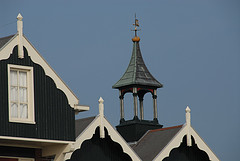
(Photo of the roof of Hotel Spaander by Flickr user FaceMePLS, some rights reserved)

Tags: , , , , ,

February 25, 2010

Berbice Dutch from Guyana is now extinct

Filed under: General,History by Orangemaster @ 11:32 am
Berbice

Berbice Dutch, a Dutch creole spoken in part of Guyana, has been declared officially extinct, according to the next Dutch edition of National Geographic.

Berbice Dutch was spoken in plantations along the River Berbice, part of Guyana which was once a private colony founded by Dutch planter Abraham van Peere from Zeeland. It is a mixture of the Zeeland dialect of Dutch, the local Arawak Indian language and Ijo, spoken by slaves from Nigeria.

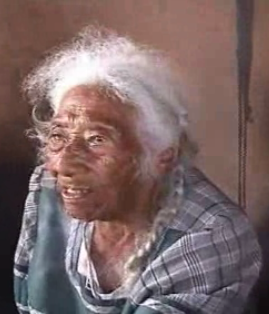
Here a video of this woman, one of the last speakers of the language, gets going at about 1:00 with explanation in English.

(Links: rnw.nl, caribbeanlanguages)

Tags: , ,

February 24, 2010

New Van Gogh discovered

Filed under: Art,History by Branko Collin @ 3:41 pm

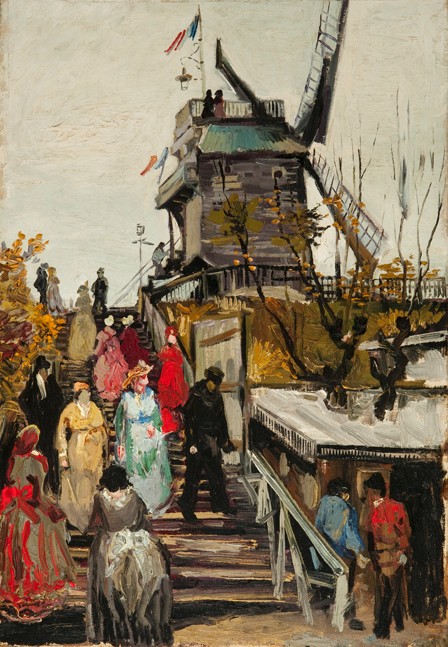
Museum De Fundatie in Zwolle has a painting in its collection that it claims was made by Van Gogh. The painting is called De molen ‘Le blute-fin.’ According to the museum, the Van Gogh Museum in Amsterdam has confirmed its authenticity.

Although it was known in the art world that this painting existed, people so far have refused to attribute it to Vincent van Gogh. According to NRC it has motifs that were atypical for the 19th century painter. It was originally discovered in 1975 by Dirk Hannema, the museum director who let himself be fooled by Han van Meegeren’s fake Vermeers, and that also would not have helped.

See also: ‘Hidden’ painting by Van Gogh discovered, about a different painting.

Tags: ,

January 4, 2010

Naked assassinated politican for sale on ebay

Filed under: Art,History,Photography by Orangemaster @ 12:28 pm
Picture 1

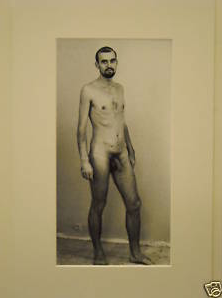
This photograph taken in 1977 of murdered, controversial gay politician Pim Fortuyn is up for grabs on ebay, bidding starts at EUR 495. If we can trust the description, it was ordered by Fortuyn, was never published and is authentic, on proper paper and all that jazz.

Pim Fortuyn, leader and founder of the LPF (Pim Fortuyn List, a party named after him) was murdered at the Hilversum mediapark (where all our radio and telly is located) by Volkert van der Graaf, a Caucasian male (that has to be said) who was upset at Fortuyn’s harshness towards Muslims.

(Link: parool.nl, Photo: Ebay)

Tags:

January 3, 2010

Bosnian war survivor writes own dictionary

Filed under: History,Literature by Orangemaster @ 1:50 pm
1564265494_35c7a32213

Husein Mujagić survived the Omarska camp in the Bosnian war and now lives in the Dutch province of Limburg. To help him deal with his memories, he wrote a Dutch-Bosnian/Serbian/Croatian dictionary. This description didn’t come over as straightforward, so I will elaborate. Roughly, Bosnian is what people speak in Bosnia and Herzegovina, Serbian is spoken by Serbs and Croatian by Croatians. It’s way more complex, as Serbo-Croatian was long taught as one language, but that is slowly being spilt apart for cultural reasons. Yes, everybody understands each other, but there were reasons why the country split up into so many parts.

Mujagić was a math teacher in his own country and since he could not easily find work without speaking good Dutch, he worked as a janitor at a school. He’s always wanted to help children learn, and this two-part dictionary was his way of helping them do so, as he started with words his children would know. Both his sons are well-employed and are doing well, something Mujagić is very proud of.

After 10 years, his dictionary has more than 3,000 pages, but he only had some 100 copies printed for friends and family, Bosnian and Dutch. He alo reassures the Dutch that with his dictionary, they can make themselves understood in Bosnia and Herzegovina, Montenegro, Croatia and Serbia, now all seperate countries.

Different but yet similar, last year we posted about a Dutch missionary in Malawi who wrote a English-Chichewa dictionary.

(Link: wereldjournalisten.nl, Photo of Mostar, Bosnia Herzegovina by Pablo Pecora, some rights reserved.

Tags: , ,

December 25, 2009

Oxenaar exhibit in Museum for Communication, The Hague

Filed under: Design,History by Branko Collin @ 1:57 pm

The name may be unknown to foreigners, or even to the Dutch themselves, but the designs of Ootje Oxenaar are deeply familiar to any Dutch person over the age of 10. It was Oxenaar who designed the Dutch banknotes between 1966 and 1985.

Unlike the drab money used in most of the rest of the world his designs were extremely colourful. Where Oxenaar could go for aesthetics instead of respectability, it appears to have been mostly because the Dutch bank, after some initial run-ins, let him be just a designer.

In this video he talks about his relationship with the Dutch bank, rejected designs, and the many Easter eggs he put in his banknotes. The exhibition at the Museum for Communication in the Hague runs until 10 April, 2010. It focuses on both his money and stamp designs.

Oxenaar’s Euro note designs were rejected, but can still be found on the web. Oh, how I would have loved to have unicorns on our bills!

See also:

(Source video: Youtube user spykeroles. Link: Bright)

Tags: , ,