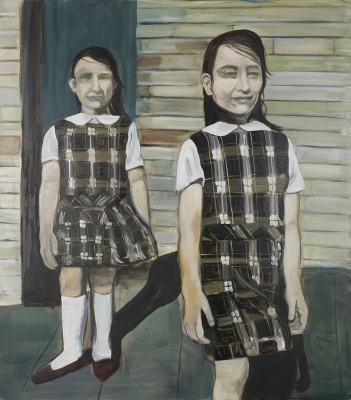
The artist’s website doesn’t tell if there are any places IRL where you can check out her work, but she’s got plenty of photos on that site.
(Found this trendbeheer.nl.)


September 27, 2009
The artist’s website doesn’t tell if there are any places IRL where you can check out her work, but she’s got plenty of photos on that site.
(Found this trendbeheer.nl.)
Tags: Chantal Spit
September 26, 2009
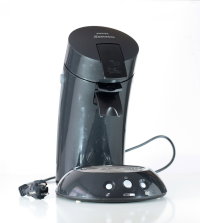 Consumentenbond compared the prices of making a single cup of coffee in regular households and came up with the following figures, according to Z24 (Dutch):
Of course, the real coffee snobs own (or want to own) their personal espresso machine. Senseo pods are called pads in the Netherlands, but when Philips and Douwe Egberts decided to export their product they wisely chose to avoid any associations with women’s hygienic products. The Albert Heijn figure was added by me.
I switched to Senseo myself, because using the regular method you never end up with just a single cup, and instant coffee is just vile.
Tags: coffee, Douwe Egberts, drinks, Philips, prices, Senseo
September 24, 2009
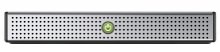
Rotterdam based company Metrological hopes to introduce a set-top box in November which will enable users to browse the Internet on their television sets.
Yes, that sounds very 1980s, but apparently the device also works as a regular TV tuner. At a price of around 400 euro, the Mediaconnect TV is somewhat expensive for a peppy tuner, the inventors admit, but they hope to sell the device to cable companies who can package it with subscriptions.
Inventors Jeroen Ghijsen and Albert Dahan have a background in designing telemetry systems for airports, and their new device is indeed based on software they wrote for controlling video cameras and lights on landing strips.
(Link: a fawning Parool. Photo: Metrological.)
Tags: Internet, Rotterdam, television
September 21, 2009
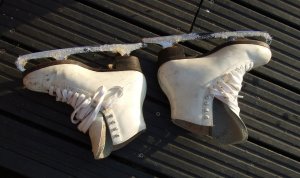
Speed skaters have suffered no ill effects from the economic crisis, reports Z24 (Dutch).
The on-line financial magazine points out that sponsor contracts for long track speed skating teams tend to be long term. Insurers TVM and DSB for instance have sponsorship contracts in place until 2014. “Skating has loyal partners,” Barbara Peeters of Referee Sportsmarketing is quoted as saying.
But the main reason appears to be the loyalty of the fans. “Skating is not a sport, but a madness,” the TVM team’s manager Patrick Wouters said.
And what may also help is that skating matches generate an enormous amount of exposure. Whereas the most popular sport, football, is behind a pay wall with only an hour of summaries shown on public television, long track speed skating is shown 120+ hours a year. With only a few companies sponsoring the sport, logos tend to be on screen for a long time.
Tags: crisis, skating, speed skating, sponsoring
September 20, 2009
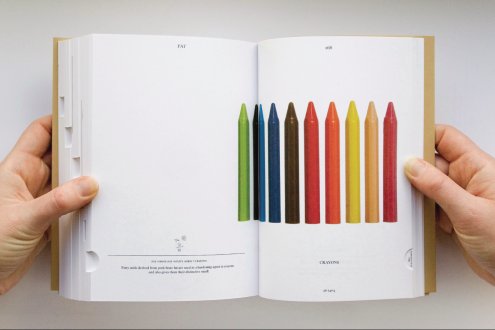
Christien Meindertsma documented 185 products contributed to by a single pig in an exhibition at the Kunsthal in Rotterdam last year, and in a book (also available in a pigskin bound version, of course). Pig 05049 won her one of the five 2009 Index design awards in August.
The list of good things coming from a pig includes bacon of course, yoghurt, pudding, paints, enamels (bone china!), cigarettes, brakes, bullets, and washing powder. The distinct smell of crayons is pig.
The Index Award prize money, 100,000 euro, will go in part to making the book available on the web, but if you want print copies you can buy them via Amazon and so on. The print version shows all the products life-sized.
(Via Jason Kottke. Source photo: Indexaward.dk.)
Tags: arms, awards, cigarettes, farms, industrialization, pigs, specialization
September 19, 2009
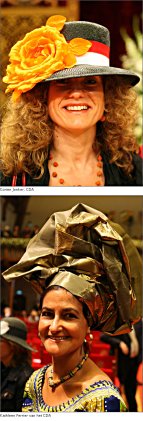 Newspaper Spits is running a poll that lets you select your favourite Prinsjesdag hat.
Prinsjesdag (Day of the Princes) is the day that the government presents its budget for the next year, that the Queen addresses a joint session of both chambers of parliament, and that is always held on the second Tuesday of the year. It is tradition for female parliamentarians to wear outrageous hats during the joint session.
And rather than holding Prinsjesdag on a Monday, Tuesday was chosen because in times before the introduction of railroads, it could take a representative more than a day to get to The Hague, and travelling on Sundays was frowned upon.
(More hats at NOS Journaal. Source screenshot: Spitsnieuws.nl.)
Tags: budgetting, hats, politics, Prinsjesdag, Queen, queens
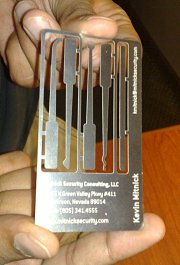 The New York Times has an article (behind a pay-wall) about lock picking as a hobby almost exclusive to Germany and the Netherlands, and about Toool, The Open Organization of Lockpickers, which …
[…] is dedicated to picking locks for fun. The movement has been growing over the last five years, with a chapter now in Eindhoven, in the east of the country, and foreign branches in several places, including Germany and the United States.
[…] Its members see lock picking as a sport and organize annual competitions, a sort of Olympics of lock picking, at which entrants compete in various categories — padlocks, mechanical locks and freestyle, in which contestants confront a variety of locks with any tools they choose, as long as they do not damage the lock. The next tournament will be held in May in Istanbul.
At the hacker camps I attended the past 12 years, there always was a lock picking tent (where for some reason you had to take your shoes off, as if visiting a temple or Canadians), but I never imagined that what they were doing there was such a local hobby. According to the NYT, lock picking as a sport was invented by Steffen Wernéry of Germany, who in 1997 started the Sportsfreunde der Sperrtechnik club. The difference between the Dutch and German lock pickers is apparently that the former, in good security tradition, share their secrets with the lock makers.
(Photo of Kevin Mitnick‘s business card by Nathan Yergler, some rights reserved.)
Tags: burglars, hobbies, lock picking, locks, security, Toool
September 12, 2009
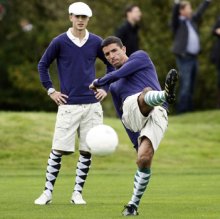 Argyle socks and knee-length shorts, those are apparently part of the dresscode for footgolf, a sport invented by advertising agency Nothing.
Last weekend professional football player Theo Janssen won the first national footgolf championship at the Rijk van Nijmegen golf course, beating his fellow FC Twente attacking midfielder Kenneth Perez. Other participants included PSV striker Danny Koevermans, local boy Roy “the phantom” Makaay and Pierre “Pi-Air” van Hooijdonk.
A wary press, realising the joke might be on them (the jury is still out) covered the event, including public broadcaster NOS:
The sport is just like golf, with the exception that you play a football instead of a golf ball, and you use your feet to play it.
Apropos ‘Nothing,’ the company’s website explains that the name describes the space where ideas come from, but I cannot help but notice that it also neatly covers the emperor’s wardrobe.
(Photo: Roy Makaay teeing off, source NFGB.)
Tags: advertising, football, golf, Nijmegen
September 11, 2009
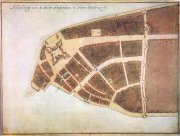
Four hundred years ago this month, Henry Hudson sailed on a Dutch ship into what became New York Harbor, a journey that inspired traders from the Netherlands to become the first immigrants to New York and establish a tolerant, motley Dutch settlement called New Amsterdam.
[…] While many New Yorkers are unaware of the festivities […].
Times have changed since previous anniversary celebrations. In 1909, there were two weeks of events, forming what was then the biggest citywide celebration New York had seen with millions of participants.
In 1959, the current queen of the Netherlands, then Princess Beatrix, came to New York for the 350th anniversary of Hudson’s arrival, and celebrated with a ticker tape parade.
“The world then was a different world,” Dutch Ambassador Renée Jones-Bos said. “Now there are far more countries. You have to work harder as a country to show what you can do and raise your profile.”
Tags: country marketing, maps, New Amsterdam, New York
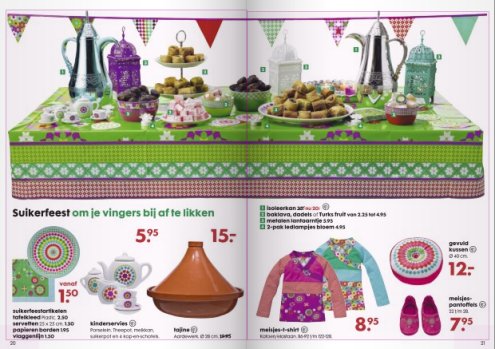
This is an ad aimed at people celebrating Eid ul-Fitr (known in Dutch as Suikerfeest), a feast that marks the end of the Ramadan (the Muslim fast), which appeared this week in the brochure of HEMA, a large and popular Dutch chain store.
I have never seen this type of advertising before, where a Dutch mainstream brand specifically addresses 5% of the population who are part of an Islamic culture, but what do I know? The commenters at Wij Blijven Hier, where I found this story (Dutch), seem to confirm my guess that this is a new thing though.
A couple of years ago, new media organisation Mediamatic.net tried to merge the HEMA with the Islamic design aesthetic in a project called El HEMA. The real HEMA first frowned at this clear misuse of their brand, but they soon turned around, even offering to take place in the jury of the related design contest. A commenter at Mediamatic’s site makes clear the importance of HEMA in defining and contrasting what we perceive of Dutch culture:
You enter a space where you cannot read a single letter, and yet you think: what do you know, I am at the HEMA. And even though you cannot read the price tags, you are sure the products cannot be expensive. After all, you are at the HEMA.