November 11, 2013

How to sabotage freedom of information requests in the Netherlands

Filed under: General by Branko Collin @ 10:51 am

Two angry blog posts in as many months show the state of freedom of information in the Netherlands. Long story short, the government wants everybody to be transparent except themselves.

In the past year political blog Sargasso directed 30 or so freedom of information requests at all levels of government. Their report of how they fared (the first court victories are expected next year) reads like a how-to for civil servants—how to sabotage freedom of information requests:

  • Be late in everything you do.
  • Split requests into multiple parts and reject them all separately.
  • Send ten-page-long rejection letters full of legalese.
  • Let the complaints committee reject the inevitable complaints.
  • Once forced by a court of law, redact the information you return to the point of illegibility.
  • Wash, rinse, repeat.

Dealing with all of these things takes time and money, of which the state possesses infinitely more than the average citizen or reporter.

Sargasso also noted that they had no troubles at all with FOI requests for non-sensitive subjects (e.g. how many restaurant permits does a city have). Only once they started digging into things like the presumably fraudulent past of the former mayor of Helmond, Fons Jacobs, did they run into a wall.

In August the Retecool blog made minced meat out of the argument that the fines governments have to pay for refusing to perform their legal duties were too high and the result of systemic fraud. Both the Vereniging Nederlandse Gemeenten (Association of Dutch municipalities) and Minister of the Interior Ronald Plasterk had argued as much.

Retecool (a not always SFW blog) pointed out that many municipalities only had to pay one or just a few fines in 2012 which hardly points to systemic abuse. The few cases where abuse seemed real ended up before the courts who had no troubles finding for the municipalities when the facts warranted it. The city of Eindhoven (200,000 inhabitants) paid the highest amount of fines of any place in the Netherlands. The 119,060 euro in fines they paid last year were for all requests they failed to process in time, not just FOI requests. Retecool contrasts this to the severance packages the city handed to its former employees, which was 150,000 euro in just the first 9 months of 2012. The blog contrasts Eindhoven’s fines with the cost of The Hague’s new year’s party, 125,000 euro in 2013. Sounds to me like the fines may not be high enough.

See also: No fees for freedom of information requests says Dutch Supreme Court

(Photo of the closed city of Severomorsk in Russia by Sergej Shinkarjuk, some rights reserved)
Tags: , , , , , , , , , ,

November 10, 2013

Tjalf Sparnaay’s hyperrealistic paintings

Filed under: Art,Food & Drink by Branko Collin @ 9:29 am

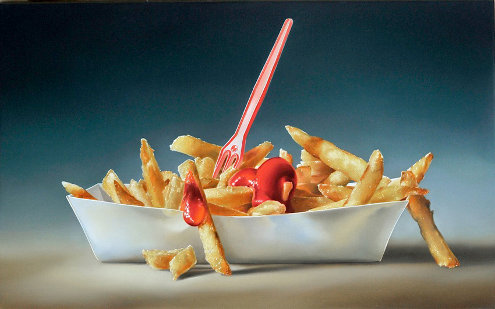
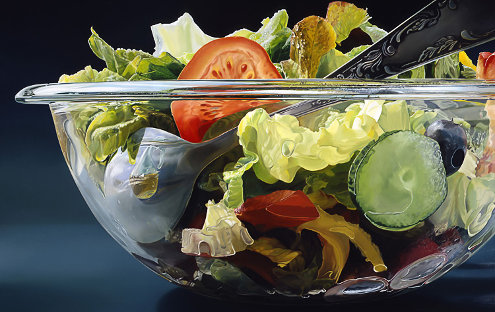
Tacky or serious craftsmanship? The hyperrealistic paintings of Tjalf Sparnaay have to be seen to be believed.

A friend of a friend bought a lithographic print of the painting shown above and hung it over her dinner table. According to the friend, Guuz Hoogaerts of the Filles Sourires blog, “you have to see it for real. The print is even on the small side. You keep looking — at least I did.”

To get an idea of the scale of the original paintings, check Mr Sparnaay’s website (linked above) where he has several photos of him next to a work in progress. Sparnaay paints still lifes containing fast food, marbles, trinkets for tourists, flowers, and so on.

Personally I’d go for something like the portion of fries shown below even though the subject may not provide the Hilversum-based artist as much of an opportunity to go wild with textures and reflections. Ketchup, though? What kind of abomination is that?

Tags: , , ,

November 9, 2013

Magazine portfolios not too worried about layoffs at Sanoma

Filed under: General by Branko Collin @ 10:04 am

Magazine publishing giants Sanoma is laying off 500 Dutch employees and shunting 2,000 freelancers, as well as considering axing or merging some of their less popular publications, some of which used to be big names in the Dutch weekly scene such as Panorama, Nieuwe Revu, Playboy and Marie Claire.

I thought it would be interesting to see what is happening to the leesmaps, magazine portfolios where for the subscription rate of about a single weekly magazine you get a whole bunch of them. The catch being you only get to keep the magazines for a week, then they move on to the next customer who pays a slightly lesser rate, and so on, until the commercial potential of the folder of magazines is exhausted. Hairdressers and doctors love leesmaps for their waiting rooms.

Does such a concept even exist outside the Netherlands? In a 2011 interview with Volkskrant, Audax founder Jacques de Leeuw claimed he invented the concept as a 17-year-old when delivering magazines that his father imported, placing the introduction of leesmaps in 1950. An unlikely story considering that the Lité Leesmap was already advertising in the 1940s in De Leeuw’s home town of Tilburg.

Leesmaps have been in decline for years. At the height of their popularity there were a million leesmap subscribers in the Netherlands, but in 2007 that number dwindled to 300,000. Still it doesn’t seem the Sanoma cutbacks will mean much of a loss to the leesmaps. To the latter, the magazines that get the axe already formed the dead wood. The question is how symbiotic the relation between the unpopular magazines and the leesmaps was. Weeklies like Panorama and Nieuwe Revu may even have been able to extend their death rattle a little longer because they were still ‘popular’ in the leesmaps.

Tags: , , , , , , , , ,

November 8, 2013

The trend of sharing unstamped train tickets through Facebook

Filed under: General,Online by Orangemaster @ 11:09 am

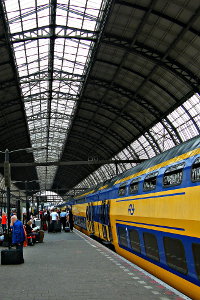
Sharing unstamped train tickets started with a Facebook page for Utrecht Central Station, the country’s biggest train station, with 9,400 likes and counting, and is spreading like wildfire to the rest of the country. Although many people now use a public transport chip card for train travel, paper tickets are still available until next year, and this trick works with paper tickets. It all started with a girl who took a picture of her train ticket and put it on Facebook to share it. Then three guys picked up the idea and started Facebook pages to do the same, with rumours of developing an app.

I plan to go from Amsterdam to Utrecht and back the same day. I buy a paper train ticket, get in the train, travel, and go back to Amsterdam in time for dinner. The train staff didn’t stamp my train ticket, so it can be used again for the same trip. The goal of the Facebook page is to share these tickets by leaving them somewhere at a train station, making someone’s else day, with a small treasure hunt as a bonus.

Technically a train ticket cannot be used twice and it is illegal to do so, but if nobody checks, nothing can be proven, and it’s been like that for ages. So why is it trendy now? Social media makes it easier to share these tickets and the prices keep going up, but not the service, so people are getting creative. As well, finding out that Dutch railways (NS) has been evading taxes to the tune of 250 million euro by buying trains through Ireland will make you stop your moral questioning since the NS is not burdened by any such feelings.

Then again, these Facebook pages are encouraging people to commit fraud, which won’t get the NS to check train tickets more often as they simply do not have the staff for it. The sharing is also not very convenient for one way tickets.

Either way, the message is clear: train tickets are too expensive and people are not happy with the NS.

(Links: www.duic.nl, www.telegraaf.nl, Photo of train by Flickr user UggBoy hearts UggGirl, some rights reserved)

Tags: , , ,

November 7, 2013

Depressed or not? It depends what you read

Filed under: Health by Orangemaster @ 5:26 pm

In 2011, we were still wondering whether the Dutch population was happy or not. On the list of world’s happiest countries in 2012 and 2013 (PDF) the Netherlands was fourth. However, researchers at University of Queensland in Australia have recently mapped the rates of depression around the world, and some results are surprising:

“The burden is highest in Afghanistan and in Middle Eastern and North African countries, as well as in Eritrea, Rwanda, Botswana, Gabon, Croatia, the Netherlands (!) and Honduras.”

I didn’t add the exclamation mark. Apparently, there are no obvious reasons why the Dutch population is depressed, only guesses: the weather (what about Belgium, the UK, etc.), going through a crisis (stress), not admitting you’re actually depressed (shame) and my personal favourite, readily available antidepressants to anybody feeling a bit blue. If 16% of the Dutch population is depressed and possibly on drugs to ‘feel’ happy, then yes, that’s depression, not happiness.

And actually since all of this is opinion and the research was not a survey of how people feel, the exclamation mark seems warranted.

(Photo of wilted tulip by Graham Keen, some rights reserved)

Tags: , ,

November 6, 2013

Modern art exhibit in historical Amsterdam canal houses

Filed under: Art by Branko Collin @ 10:44 pm

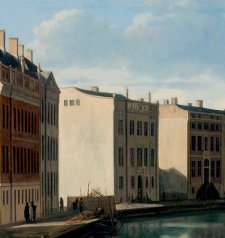
Amsterdam’s famous canal ring turned 400 this year and as part of the celebrations an art exhibit is being held in 15 historical canal houses.
The houses include the mayor’s residence just past the Golden Bend. The artists were selected by curator Siebe Tettero because they had some connection with Amsterdam. They include current darlings of the Dutch art scene Joep van Lieshout and Viviane Sassen.

The exhibit—called Chambres des Canaux—started this week and will run until 17 November except on Mondays. You can buy a ticket for 14 euro at the tourists offices which will give you access to all the venues.

Getting access to the former homes of rich traders sounds like a pretty unique in itself. Should you not be able to make it before 17 November, there is always the Museum Willet-Holthuysen on the Herengracht, which is the home of 19th century art collector Abraham Willet and which has been preserved in the style of its last residents.

(Link: I Amsterdam. Illustration: Gerrit Adriaensz Berckheyde, public domain)

Tags: , , ,

November 5, 2013

Lou Reed’s Perfect Day rings out in Groningen

Filed under: Music by Orangemaster @ 10:36 am

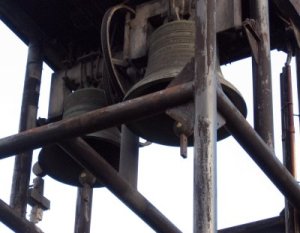
The story goes that the late Lou Reed was in Groningen in November 2008 for one of Laurie Anderson’s (one of his wife’s) concerts. He was invited to visit the Martini tower to have a look at its carillon. The city’s bell ringer Auke de Boer gave Lou and Laurie a tour and let them play the carillon. Lou was very interested in this historical instrument and later gave his permission to use Perfect Day for a special event on the carillon. The tribute was played on Saturday 2 November 2013 exactly 5 years and one day after Lou and Laurie visited Groningen.

The bells kick in at 0:27.

(Link: trendbeheer.com)

Tags: , ,

November 4, 2013

Erwin Olaf’s euro coin criticized for cheap typography

Filed under: Photography by Branko Collin @ 2:35 pm

Erwin Olaf is a kick-ass photographer, but does that make him a good coin designer? The Netherlands do have to uphold a reputation in this respect.
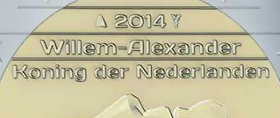
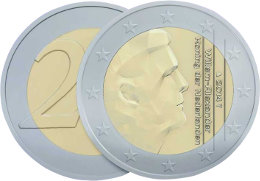
When Willem-Alexander became king of the Netherlands the need arose to design new coins. The job was given to Mr Olaf this time around. He seems to have done a respectable job, except for the lettering. Fonts In Use says: “It’s highly questionable whether such a bold wide retro-futuristic letterstyle in mixed case is suited for the medium and the topic—and whether it had to be a font (as distinguished from custom lettering) in the first place.”

The alleged lettering.

Mr Olaf used a free font he found on the web called Days, which is according to a commenter over at Fonts In Use “a display typeface meant for use in large sizes.”

The choice for an off-the-shelf type is also remarkable when contrasted with the fact that the country “today has more type designers per capita than any other country in the world, a remarkable fact considering that there is now not one surviving Dutch type foundry”, typographer Gerard Unger is quoted as saying on Typotheque.

See also:

(Illustrations: Fonts In Use)

Tags: , , , , ,

November 3, 2013

Documentary De Nieuwe Wildernis draws 400,000 visitors

Filed under: Nature by Branko Collin @ 1:33 pm

Dutch nature documentary De Nieuwe Wildernis has managed to lure 400,000 people to the cinema in just a month, Vroege Vogels wrote last Monday.

The documentary about wildlife in the Oostvaardersplassen (‘the lakes of those who sailed to the East’) was released on 26 September 2013. For feature films 400,000 visitors is considered pretty successful, but for a documentary it’s practically a miracle. As a comparison, last year Hollywood blockbuster The Hunger Games took the number 13 spot with 458,816 visitors.
Part of the attraction of Ruben Smit’s De Nieuwe Wildernis may be that there is very little original nature left in the Netherlands. Biodiversity is at an all time low in this country, the Mean Species Abundance having dropped from 40% in 1900 to 15% in 2000. The average MSA for Europe is 40%.

The nature reserve Oostvaardersplassen came about by accident. It is situated on the north end of Flevoland, the largest artificial island in the world. Originally reclaimed in 1986, the area was to be bordered by another artificial island, Markerwaard, and intended for housing business parks, but in 1986 the national government decided not to build the extra island. With businesses also staying away, nature took over. In 1986 the area was designated a national nature reserve.

See also: Searching and capturing that elusive horse wind.

(Photo: crop from the video)

Tags: , , , , ,

Dave Hakkens partners with Motorola for Phonebloks

Filed under: Design,Sustainability,Technology by Branko Collin @ 12:01 am

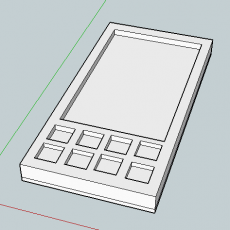
Mobile phone manufacturer Motorola has announced it will be working with Dave Hakkens on his modular phone project Phonebloks.

More precisely, Motorola has been working on its own modular system in the past year called Project Ara, which is designed to be “a free, open hardware platform for creating highly modular smartphones. We want to do for hardware what the Android platform has done for software: create a vibrant third-party developer ecosystem, lower the barriers to entry, increase the pace of innovation, and substantially compress development timelines.”

The manufacturer will now be “engaging with the Phonebloks community throughout [Project Ara’s] development process.” The idea behind Phonebloks is to create a modular phone to combat electronic waste—instead of throwing out an entire phone because a component is broken, you swap out the broken component instead. Phonebloks is looking for manufacturers who want to work in their ecosystem.

Motorola was once a major player on the mobile phone market. It was recently acquired by Google. Dave Hakkens is a 2013 graduate of the Design Academy Eindhoven.

(Via The Verge)

Tags: , , , , , , , ,