


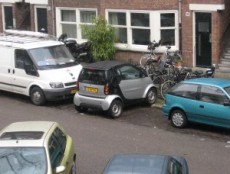
 Last month, lost in a footnote, I hinted at a common practice in a rich neighbourhood of Amsterdam of not paying parking tickets.
Instead, the rich used to fight their tickets in court. They assumed that because the district had to pay its lawyers with public money, the district would prefer to turn a blind eye to parking violations.
Volkskrant wrote back in 2001: “In the entire neighbourhood committees were started to collect the legal expertise needed to fight parking fines in court. Once people had won a couple of their cases, posters started appearing at the dry cleaners: ‘Got ticketed? Fight the fine!'”
The article, a vignette of the Amsterdam neighbourhood Museumkwartier, quotes a police officer who gets worked up over the lack of respect shown to his office, but his colleague, one Jan Okx, sees the positive side of the situation: “The people get to know each other, which improves the cohesion of the neighbourhood.” Volkskrant describes his attitude without a hint of irony as “thinking in processes”.
I wonder if an article like that could still be published today. The one percent have destroyed the economy and the phrase ‘the rich are getting richer’ is no longer just a leftist cry but a scientific fact.
 An OESO study has discovered that the Netherlands bucks the trend of the rich getting richer at the expense of those paying for the crisis.
 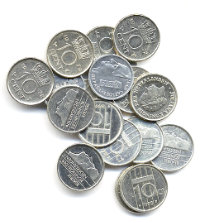 Last January garbage collectors found 46,000 guilders in old office furniture that most likely came from the offices of Amsterdam’s district Zuid (‘South’).
 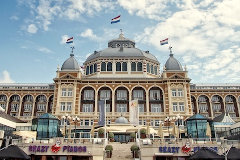 The Kurhaus Hotel in Scheveningen near The Hague is bankrupt,
 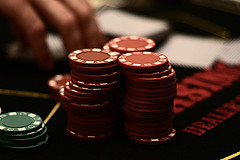 In March of this year the Jonker family of Kerkrade in Limburg seemed to have struck gold when father Jos (47) reached sixth place in an online poker tournament, netting him a cool 370,000 euro. The happy story turned sour quickly when 17 year old son Jimmy was found boasting in online forums that it was him that had been playing the finals, drawing the attention of organisers PokerStars.
 Glossy money magazine Quote presented its