January 15, 2014

Bookshop owner to go to court for selling Hitler’s memoirs

Filed under: History,Literature by Orangemaster @ 8:42 pm

book_stack

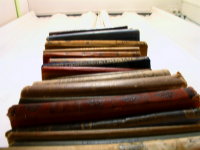
Michiel van Eyck, owner of the Totalitarian Art Gallery in Amsterdam was questioned by police for an hour recently on the sale of Adolf Hitler’s memoirs Mein Kampf.

You see, the sale of Mein Kampf is banned in the Netherlands under anti-discrimination laws. Sure, you can just score it online instead, which is legal and makes the ban absurd and not very useful.

Van Eyck feels that selling the famous memoirs is not inciting hatred, as he also sells books written by Stalin, Mao and the likes. He hopes to go to court to have what he feels is an outdated ban overturned.

(Link: www.amsterdamherald.com)

Tags: , , ,

January 12, 2014

Alexine Tinne, 19th century explorer, fashion designer and photographer

Filed under: History by Branko Collin @ 10:02 pm

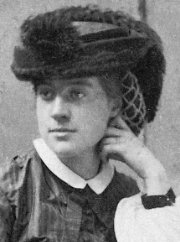
alexine-tinne-pdApart from the Arctics, the interior of Africa was one of the last places left for Europeans to ‘discover’ and finding the source of the Nile was a major goal for 19th century explorers.

One of these explorers was a woman from The Hague, Alexine Tinne (b. 1835 – d. 1869). Growing up as one of the richest heiresses of the Netherlands in a time when European women were expected to ‘know their place’, nobody would have batted an eyelid if Tinne had stayed at home and prepared for marriage. But even at a young age Alexine Tinne shared with her mother Henriëtte (a former lady-in-waiting and daughter of an admiral) a thirst for travel.

In 1855 mother and daughter sailed up the Nile for the first time in order to reach Karthoum, but it would take them several expeditions to succeed. In 1861 they not only reached Karthoum but decided to push through to Gondokoro in Sudan (near present-day Juba) and beyond. Gondokoro was known as the last place where the Nile was navigable but Tinne fell ill there.

During an attempt in 1863 Tinne lost her mother, her aunt and two servants; it would be her last voyage up the Nile. Writer Redmond O’Hanlon told Historiek.net that he believes Tinne and her mother wanted to discover the source of the Nile: “that was their goal, I am sure of it.” But contemporaries did not approve of women explorers and O’Hanlon fears this is why the Tinne expedition kept schtum about its real motives. Samuel Baker, another Nile explorer of the time, wrote of the competition: “There are Dutch ladies travelling without any gentlemen… They must be demented. A young lady alone with the Dinka tribe… they really must be mad. All the natives are naked as the day they were born.”

Tinne, who felt responsible for the death of her mother and aunt, stayed in Africa. In 1869 Alexine Tinne, while living in Tunesia, decided to cross the Sahara. On 2 August of that year her caravan was ambushed by Tuaregs at the wadi of Chergui in what is now Algeria. Tinne was killed with two sword blows and a gun shot.

Although she only reached the age of 33, she accomplished quite a lot during her life. She designed clothes that she wore herself, wrote and drew the source materials for a botanical guide about the plant life in Sudan (the Plantae Tinneanae), started a half-way house for freed slaves and, in between two of her Nile expeditions, experimented with photography.

See also:

Tags: , , , , , , , ,

December 23, 2013

Look behind 94 gables of KLM’s Delftware houses

Filed under: Architecture,History by Branko Collin @ 10:43 am

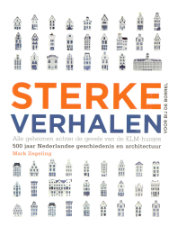
sterke-verhalen-mark-zegelingLast October Mark Zegeling published a book called Sterke Verhalen voor bij de Borrel (tall tales to drink to) in which he explores the houses that KLM’s famous Delftware replicas are based on.

Dutch airline KLM gives away small Delftware bottles (produced in Hong Kong) to its business class passengers on long-haul flights. These bottles are shaped like classic Dutch houses and filled with jenever. So far 94 of them have been produced and now someone has written an extensive book on the history of the real houses that form the basis of KLM’s gifts.

Bol.com describes the book as follows: “[it] combines the best anecdotes and tallest tales about the life behind those gables. […] It discusses William of Orange’s closest friends, Rembrandt’s sales techniques, Mata Hari’s bed, a golden treasure in a garden and human fat as a miracle cure. […] Illustrated using more than 1,700 photos and paintings from various museums.”

The book appears to be self-published and is available, amongst others, from the author’s website.

Earlier we wrote about a KLM website which also tells the story of the airliner’s Delftware houses, although the site does so (from what I can tell) in less detail than the book.

Tags: , , , , , ,

December 12, 2013

Food and drink could use a national boost

Filed under: Food & Drink,History by Orangemaster @ 3:48 pm

dutch_flag.jpg

It’s quite true that tourists don’t come to the Netherlands for the food like they would in France or Italy. The Netherlands has wonderful things to offer tourists and inhabitants, but culinary delights, unfortunately, remains a major point of contention.

The Dutch Centre for Folk Culture and Intangible Heritage is apparently compiling a list of suggestions of what the Dutch would like to see on the World Heritage List and Foodlog.nl says none of it is food. Ouch.

Many events such as celebrations of holidays and traditions have been suggested, many of which can be found in other countries, but nothing to eat or drink. Suggestions made by Foodlog.nl to get the ball rolling include:

  1. Pepernoot from Van den Brenk (1752), not to be confused with ‘kruidnoten’
  2. Dutch-style appetizers (‘bittergarnituur’) made up of liver sausage, beef sausage, mature cheese and ‘bitterballen’.
  3. Vlaggetjesdag (Flag day, as in cocktail flags day), the Dutch haring eating tradition by dropping the whole fish in one’s mouth.
  4. I’d like to add jenever (aka gin), but it already has protected status.

    Anything else? Go for it in the comments.

(Link: www.foodlog.nl, Photo by Quistnix, licensed under Creative Commons Attribution 1.0)

December 10, 2013

Hobby exhibition uncovers piece of Dutch meteorite

Filed under: History by Orangemaster @ 1:55 pm

Hoba

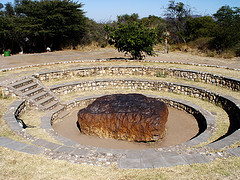
Registered as having fallen on 27 October 1873 in Diepeveen, Overijssel, a piece of a meteorite popped up at a hobby exhibition and may actually be made up of substances older than our solar system. The one shown here is the biggest known meteorite in the world, the Hoba meteorite in Namibia.

The ‘Diepenveen’ (meteorites are named after where they were found) weighs only 68 g and it just 5 x 3 x 3,5 cm in size. However, it is the fifth meteorite ever found in the Netherlands, making it very rare, according to Dutch expert Marco Langbroek. The rock is currently undergoing detailed analysis by Langbroek and his colleague Wim van Westrenen of the Vrije Universiteit Amsterdam, which cannot be rushed as the rock is very fragile and needs to be handled with the utmost care.

The other four known meteorites have fallen in Uden, Noord-Brabant; Blauwkapel, Utrecht; Ellemeet, Zeeland and Glanerbrug, Overijssel.

For many years when I was small I lived in an area called Manicouagan (in Québec, Canada), which is apparently “one of the oldest known impact craters and is the largest ‘visible’ impact crater on Earth” of which Dutch astronaut André Kuipers took a breathtaking picture from space.

(Link: www.kennislink.nl, Photo of Hoba meteorite by coda, some rights reserved)

Tags: ,

December 6, 2013

Nothing tops Groningen as a cyclist’s paradise

Filed under: Bicycles,History,Sustainability by Orangemaster @ 7:00 am

Bikes-Grunn

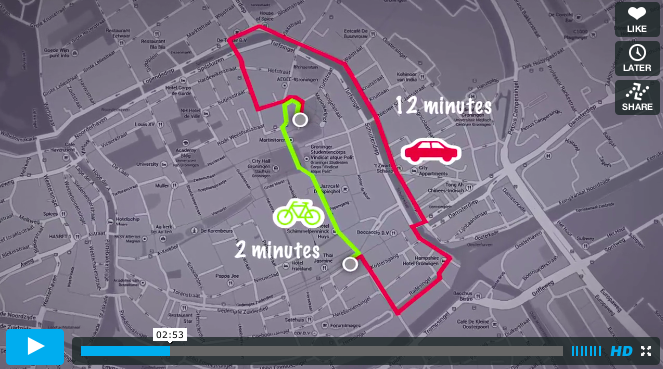
Groningen, a city in the North of the Netherlands whose slogan is ‘Er gaat niets boven Groningen’ (‘Nothing tops Groningen’) has some 196,000 residents, a quarter of which are students and where half of the population, if not more, gets around by bicycle. The film by Clarence Eckerson Jr., an American who was inspired by what he saw, tells the story of how cycling took over Groningen.

Travel times by car are longer (see screenshot) and cycling is faster because cars need to go around the city center to get from one part of town to another, while bikes can go anywhere. At about 9:00 into the film, you can see that even IKEA, apparently a very big one, has serious accommodations for cyclists. The one downside of this film is that it’s not bright and sunny like that very often, but again, when it is, you have a great excuse to get out on your bike.

Watch the whole film and get a feel for Groningen, always a lovely place to visit and a city we like, too:

Lou Reed’s Perfect Day rings out in Groningen

University of Groningen gaining popularity with Brits

Groningen students build world’s largest touch screen

Watch the film, it’s in English (and some Dunglish):

Groningen: The World’s Cycling City from Streetfilms on Vimeo.

If you want more, there’s always Bicycle anecdotes from Amsterdam, which has a friend of 24oranges nicely waiting for a tram to go by.

(Image: Screenshot of Groningen: The World’s Cycling City)

Tags: ,

November 21, 2013

Archaeologists dig up the oldest city seal of Rotterdam

Filed under: History by Orangemaster @ 12:55 pm

Archaeologists are claiming to have found the city of Rotterdam’s oldest city seal from 1351 on the site where the country’s biggest covered market is being built. The seal is made of beeswax and was discovered in a copper box. On the seal can be read “clavis sigilli de rotterdam”, or ‘key seal of Rotterdam’, and was used to seal the back of documents.

The seal is said to depict the Rotte river, while the vertical bar is a dam. However, in this modern day and age the ‘international sign of friendship’ (aka ‘the bird’ or ‘three-finger salute’) does come to mind more quickly than a river and a dam.

Back in 2011 we told you about the oldest graves of the Netherlands discovered in Rotterdam.

(Link: www.ad.nl, Photo: BOOR)

Tags: ,

November 18, 2013

Photo report of the Saint Nicholas parade in Amsterdam

Filed under: History by Branko Collin @ 8:02 pm

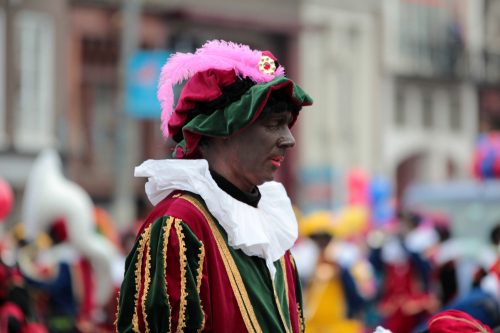
Yesterday I went to the Saint Nicholas parade in Amsterdam.

The bishop of Myra visits the Netherlands, Belgium and other parts of Europe each year to give gifts and candy on his birthday (6 December) to children that have been good and to take children that have been bad back to his palace in Spain.

Recently the appearance of Saint Nicholas’ helpers, the Black Petes, has drawn criticism for its uncanny resemblance to a black caricature.

As a response to the criticism, the city of Amsterdam promised to tone Black Pete down a bit. I did not see much evidence of that, the lips were caricaturally red as ever, although golden earrings seemed to have disappeared.

(more…)

Tags: , , , , ,

October 26, 2013

There’s a board game about the Dutch West Indies Company

Filed under: History by Orangemaster @ 3:41 pm

new_amsterdam

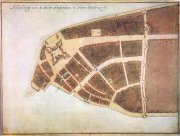
This past summer Texas game manufacturer Pandasaurus released a board game called Nieuw Amsterdam (New Amsterdam) about the earlier years of the 17th century Dutch colony that was run by the Dutch West Indies Company, which later became New York City.

New Amsterdam was founded by the Dutch West Indies Company in order to encourage the lucrative beaver pelt trade with the local Native American hunters along the Hudson River. To establish a trading post there, they needed a town and a fort, which was built on the tip of Manhattan Island. To encourage European patroons, settlers of means or noble birth to populate the colony, they granted them both land and indentured servants. The patroons became the lords of a new feudal system not unlike in Europe. In New Amsterdam, players are those patroons, and they bid on action lots in order to build businesses, work land for both food and building materials, compete in elections, ship furs to the Old World, and trade with the Lenape Indians – a process that gets more complicated as players claim more land and push the Lenape camps farther up the Hudson River.

It is apparently not yet available in the ‘old country’, but I’m sure it’s just a question of time.

Here’s a review of New Amsterdam:

(Links bright.nl, pandasaurusgames.com, Image: Castello Plan of the tip of Manhattan)

Tags: ,

August 5, 2013

Night of the Butter made German entrepreneurs rich 50 years ago

Filed under: History by Branko Collin @ 8:44 am

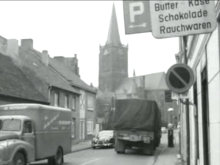
After World War II the Netherlands took two small villages and an assorted number of small territories from the Germans as reparations, most of which were returned on 1 August 1963 in exchange for 280 million German marks.

At the time of the return, certain food stuffs like butter, coffee and cheese were much cheaper in the Netherlands than in Germany, Der Westen reports. A kilogram of butter was 2 guilders cheaper, which is 5 euro in today’s money. Smart entrepreneurs—the site doesn’t mention names—spotted an opportunity and drove 150 trucks worth of goods into the village of Elten on the night of 31 July, what later became known as ‘Butternacht’ (Night of the Butter). When the clock struck midnight, it is said these entrepreneurs made a profit of about 50 to 60 million guilders by ‘transporting’ goods from the Netherlands to Germany without moving the goods one inch and without having to pay import duties. Instead the border was moved. At the time a guilder was worth about 0.25 US dollar or 0.1 British pound.

The Dutch occupation doesn’t seem to have hurt Elten. Hundreds of thousands of tourists came to the town each year to look at the spoils of war and climb the Eltenberg, a 82 metre high hill. When the Dutch returned the town to the Germans, it was the only German town in the neighbourhood that wasn’t in debt, De Volkskrant wrote last Saturday.

Original Dutch plans for reparations included annexing large areas of the German states of Lower Saxony and North Rhine-Westphalia and deporting the 10 million Germans living there, but the Allies and especially the US did not look kindly upon those plans and only allowed the annexation of an area containing some 10,000 people. Now, in 2013, the only land that hasn’t been returned to Germany since the war is the Duivelsberg, a hill near Nijmegen that was hotly contested during Operation Market Garden after it was taken following a short fire fight between the Able Company of the 508th USA Parachute Infantry Regiment and a German company. Much later during my student days it had turned into a famous local make-out spot.

See also: Murder on the border, about the Dutch-Belgian town of Baarle where you may cross a border simply by walking from one room to another.

(Photo derived from a newsreel by Polygoon-Profilti, some rights reserved)

Tags: , , , , , ,