

Planned for this year Dordrecht will have the very first modern day baby hatch where unwanted babies can be safely left for them to become foundlings. Modern day because it has been a practice since the Middle Ages and, depending on one’s beliefs, there’s also the Bible telling us about Moses who was adopted as a foundling by the Egyptian royal family.
The Netherlands currently does not have a place for mothers who do not want to keep their children, and the baby hatch in Dordrecht plans to fill that void. Since Belgium allowed baby hatches in 2000, three babies have been ‘dropped off’. During the same time span some 278 babies in Germany have been ‘deposited’. At the moment, Dutch law forbids abandoning babies for them to be adopted as foundlings.
On the one hand, more help could be given to these women for them to keep their infants, on the other hand, sometimes it is the father, step-father, other family members or even pimps that give away the baby for them. There must be a plethora of reasons why someone would give up a child, but considering the process is anonymous, actually finding out what those are is difficult, making way for much speculation and easily blaming the mothers for everything.
Although the UN claims opening baby hatches goes against the rights of children, even the Vatican has a baby hatch or ‘baby box’ as they are sometimes called.
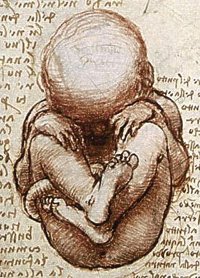
(Links: www.trouw.nl, www.bbc.co.uk, Illustration by Leonardo da Vinci)
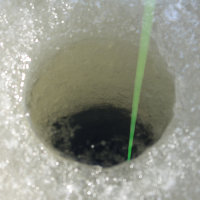 Last Thursday Kuinre, Flevoland played host to the first edition of the Dutch ice fishing championship. Some 25 participants had two hours to reel in a catch, but in the end, not a single fish was caught.
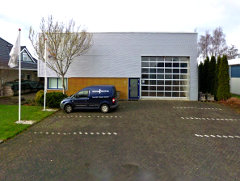 A museum dedicated to the computers of US manufacturer Apple has opened its doors in the town of Ureterp, just East of Drachten in Friesland.


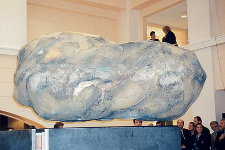 Until January 2013 Museum Het Valkhof in Nijmegen will hold a unique exhibition entitled ‘Pop Art in Europa’ featuring European Pop Art, a style usually associated with the United States and the likes of Andy Warhol or Roy Lichtenstein. More than 100 works of European Pop Art from the Netherlands, the UK, France, German, Spain, Portugal and Belgium can be admired, something that has never been shown this way before, with many works that have never been on display in the Netherlands.