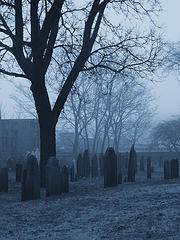
In Swifterbant, Flevoland, the country’s famous province entirely made from reclaimed land and known for remains of all kinds, claims to have found remains of the oldest Dutchman. The excavation of a grave revealed some bones which date back to about 7000 BC, making it the oldest remains ever found in the Netherlands.
Note: we still can’t bring you new pics, bear with us, we’re waiting for it to be sorted.
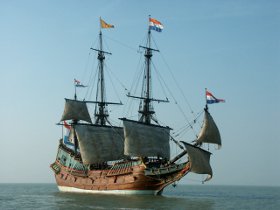
Last Wednesday the Dutch and Australian governments signed an agreement on how to give Australia the Dutch half of the ANCODS collection, which contains the salvage of four Dutch ships that sank near the Australian coast in the 17th and 18th century.
The agreement to give Australia the Dutch portion of the artefacts had already been taken in 2006, Flevocourant writes.
According to a press release (PDF, 2009) by the ministry of foreign affairs the collections of the Batavia (1629), Vergulde Draeck (1656), Zuytdorp (1712) and the Zeewyk (1727) “include bricks, building blocks, lead ingots, elephant tusk, canon, canon balls, amber and pitch as well as rare objects owned by crew and passengers such as navigational instruments and ornaments”.
“Rather than dividing objects between the two countries, they will be kept as close as possible to the shipwrecks where they have been excavated. This is why the Netherlands has agreed to entrust Australia with safeguarding the objects, which are currently in Dutch possession.”
The agreement was signed aboard a replica of the Batavia which is stationed in Lelystad.
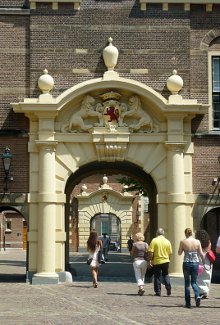
During September the Dutch Wikimedia chapter (the people behind Wikipedia) are calling upon everybody to send in correctly licensed photos of official national monuments, so that Wikipedia can use the uploads.
The Wiki Loves Monuments site has posted a very long list of the monuments, divided by province and town, and tagged with the exact geographic location, so that participants who would like to take fresh photos can easily plot a hike through their neighbourhood.
There is a competition attached to the event, with an iPad being the first prize, and an HTC Desire the second. You have until September 30 to upload your photos, and you don’t have to limit yourself to photos taken this month.
An earlier similar and very successful event was called Wiki Loves Art, and was held in June 2009, resulting in about 5,000 Creative Commons licensed photos. That the current edition is held in September is no accident, as the Open Monuments Day on September 11 gives a lot of access to (the inside of) monuments that are closed the rest of the year.
Filed under: Design,History by Branko Collin @ 2:23 pm
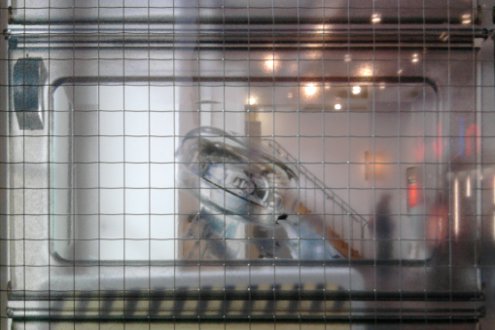
The Amsterdam Historical Museum and Mediamatic have teamed up to do something different. Rather than have you look at historical objects from a safe distance, they will let you buy them for 1 or 2 euro each.
The exhibit lasts until August 29, and is accompanied by a really nice website where the background of every object is explained in a video. There are 40 different objects for sale.
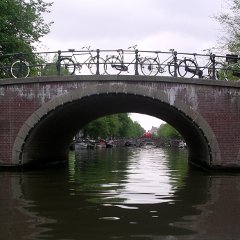
The appointment fits right into the city government’s fantasies of turning the city into Anton Pieck‘s wet dream. A group critical of—and therefore silenced by—the municipality, pointed to the damning example of staid Bruges in Belgium earlier.
Publicist Rogier van Kralingen told Radio Netherlands: “People don’t visit Amsterdam just because it gives them a flavour of the past, but because it has a strong spirit of freedom. The city has an open-hearted, liberal feel to it. If a city wants to create a good environment for its residents and international businesses – which, let’s face it, will have to provide most of our income – you need to maintain a healthy balance between tourism, recreation and people’s freedom to do what they want.”
Filed under: History,Weird by Branko Collin @ 12:51 pm
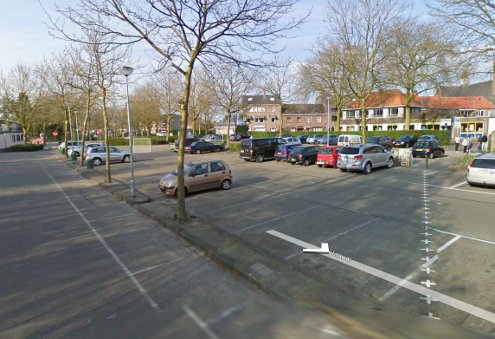
Baarle is a town in the Netherlands … and Belgium. It contains 39 Belgian enclaves on Dutch soil and 5 Dutch enclaves on Belgian soil, and some of them are inside each other, so that you get “this whole ridiculous Russian Doll situation,” to quote New Zealand’s fourth most popular folk parody duo.
The dashed line you see in the photo above is one of the borders, and as you can see, the Google Streetview car refuses to drive onto Belgian territory. I am not sure why that is, but perhaps it is because Belgian copyright law prohibits the publishing of photos of architecture.
A pity really, because otherwise you could have taken a virtual tour of one of the politically strangest towns in the world.
Filed under: Comics,History by Branko Collin @ 2:37 pm
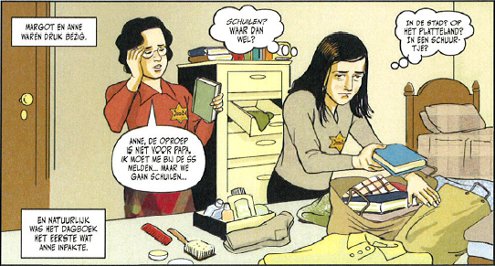
The Anne Frank Foundation will publish a comic version of part of the diary of Anne Frank this week.
Written by Sid Jacobson and drawn by Ernest Colón, the 160-page-long graphical biography will be sold for 15 euro. There are also editions planned for English, German, French, Italian and Spanish speaking countries.
Filed under: History,Sports by Branko Collin @ 10:16 am
Among the tidal wave of World Cup themed commercials, a disturbing trend emerges. Several Dutch companies have come out with TV ads that prominently feature German bad guys.
Heineken’s ad is perhaps the mildest, featuring a representative of the German football association proudly presenting earplugs to counter the noise of the Pletterpet, an orange cap. It paints Germans as rather dull folk, not quite the traditional stereotype over here.
Supermarket C1000 on the other hand goes the full nine yards, as it has a Cruella de Ville look-alike announce that she has to take one for the German team. Utilities company Nuon lets a ‘typical’ arrogant German fan get his comeuppance when his T-shirt turn orange, the Dutch national colour, while standing among his fellow fans.
Both Germany and the Netherlands participate in the upcoming World Cup in South Africa. Anti-German sentiments were alive in the Netherlands from World War II onwards to well into the 1990s, but kids these days just don’t seem to see the point. Which makes it even odder that these ads are so blatantly anti-German.
Something I heard a lot this year, now that Dutch coach Louis van Gaal and Dutch players Mark van Bommel and Arjan Robben have had such a successful year at Bayern Munich: “I never thought I would say this, but I am actually supporting the German side.”
Filed under: Comics,History by Orangemaster @ 12:24 pm
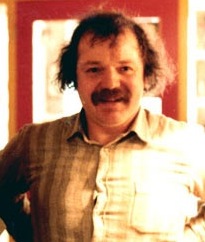
Back in November 2008 famous comic book store Lambiek in Amsterdam celebrated its 40 year anniversary, a milestone even famous Dutch comic strip artists like Hanco Kolk and Jean-Marc van Tol probably did not expect the store to reach, considering their rightful laments on this tough business.
Unfortunately, today marks the passing of Kees Kousemaker, founder of Lambiek, who was just 68 years of age. According to the Dutch association of comic strip artists, “Kees Kousemaker meant a lot to the comic strip world and helped many an artist.” He was the driving force behind the Comicopledia, the largest online source on comics, an author, organisator and owner of what could easily be called the most important and influential comic book store in the Netherlands, and possibly the oldest still standing in the world. RIP.
Filed under: Design,History by Branko Collin @ 11:48 am
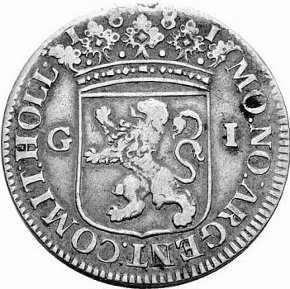
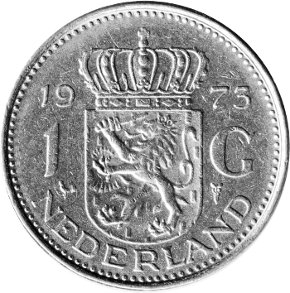
The coin to the left was issued in 1681 by the states of Holland and Friesland, of the Dutch Republic. It was a silver guilder design sporting the lion from the coat of arms of Holland. The coin to the right was issued by the Netherlands in 1973, and was I believe the penultimate design.
The last design had a 1980-ish look with grids and layers. It was replaced in 2002 by the euro.



 Last Wednesday the Dutch and Australian governments signed an agreement on how to give Australia the Dutch half of the
  During September the Dutch Wikimedia chapter (the people behind Wikipedia) are calling upon everybody to send in correctly licensed photos of official national monuments, so that Wikipedia can use the uploads.
 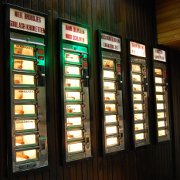 The Amsterdam Historical Museum and Mediamatic have teamed up to do something different. Rather than have you look at historical objects from a safe distance, they will let you buy them for 1 or 2 euro each.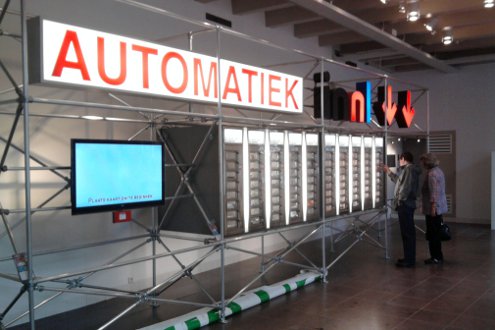
 Amsterdam’s city hall scored a major victory in the War on Fun today when