



For the casual observer looking at the Netherlands, the Tulipmania story has it all: tulips, the Golden Age, the start of modern capitalism, windmills, clogs… OK, so everything but the last two. For the puritans among you, this tale has even got a moral. Here’s a quick recap of how the story goes:
In the 17th century, the Dutch were at the top of their wealth, both financially and culturally. The Dutch trading ships controlled the seas, and brought the treasures of foreign countries to these shores. This wealth ignited the local Renaissance, giving artists like Rembrandt and Vermeer, and scientists like Van Leeuwenhoek and Grotius a chance to plie their trade. A story from that time goes that the first economic bubble was also created by the Dutch. Among the many things they imported were tulip bulbs, which started to fetch higher and higher prices. At one point, a box of bulbs would cost as much as a house. But in the spring of 1637 the bubble was burst; Dutch pride was punished, and thousands of traders went bankrupt.
At least, that’s the popular version of the story. According to a recent book written by Anne Goldgar, most of what we know about the bubble stems from propaganda from the period. An interesting review from the Financial Times tells more:
Some contemporary pamphleteers attacked the trade, baffled by what one Englishman called the ”incredible prices for tulip rootes”, and disquieted by the godless materialism of it all. […] Most tulip tales we know, scolds Goldgar, ”are based on one or two contemporary pieces of propaganda and a prodigious amount of plagiarism”.
In fact, during her research Goldgar could not find the name of a single person who had been bankrupted by the burst of the bulb bubble.
![[logo Wikipedia]](https://www.24oranges.nl/wp-content/uploads/2007/05/logo-wikipedia.png) The press office of Trafigura, the company which leased the leper ship Probo Koala at the time it dumped 500 tons of toxic waste in Ivory Coast last year, was caught red-handed “cleaning up” the
The press office of Trafigura, the company which leased the leper ship Probo Koala at the time it dumped 500 tons of toxic waste in Ivory Coast last year, was caught red-handed “cleaning up” the  May 10 was the 75th birthday of “The William” (het Wilhelmus in Dutch) as the Dutch national anthem. Queen Wilhelmina ordained on May 10, 1932 that from that day on, the more popular song should replace the slightly xenophobic “Wien Neerlands Bloed” (“If Dutch blood flows through your veins / Free from foreign stains”), which had served as the first national anthem since 1815. Ironically, the latter song was expressly created to counter The William, which was considered a pro-protestant song, and therefore offensive to Roman Catholics.
 The Dutch never really warmed to the idea of the credit card, and generally consider it unsafe for online transactions. The new kid on the block, the iDeal system, is rapidly gaining ground, according to the organisation controlling several popular payment methods for the major Dutch banks, Currence, who also run the iDeal system (
 Christian daily Trouw (translates to ‘loyal’) has an interview with Flemish writer
![[Cover of Zone 5300, issue 14-1]](https://www.24oranges.nl/wp-content/uploads/2007/04/zone_5300-14_1-cover.jpg) The spring issue of
The spring issue of ![[panel from Armand and Ilva]](https://www.24oranges.nl/wp-content/uploads/2007/04/zone_5300-14_1-the_tjong_khing.png) – An interview with Thé Tjong Khing (right), perhaps best known for his children’s books illustrations, but also for his recently republished Arman & Ilva sci-fi comic (written by Lo Hartog van Banda)
– An interview with Thé Tjong Khing (right), perhaps best known for his children’s books illustrations, but also for his recently republished Arman & Ilva sci-fi comic (written by Lo Hartog van Banda) – An interview with Utrecht-based collage artist Raymond Teitsma (left)
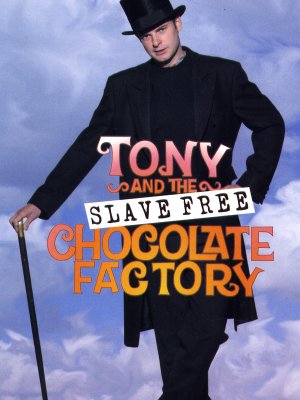 On Thursday the criminal court in Amsterdam threw out a case against reporter Teun van de Keuken for complicity in slavery. Van de Keuken, who co-hosts a consumer advocacy show on TV called ‘Keuringsdienst van Waarde’ (a pun referring to the Dutch Food and Drug Administration), instigated the case against himself

